We buy trenchers
Sell Your Trencher
Chain trenchers, plows and combination units — priced on chain and teeth condition and attachment set.
- Written offers
- Transport arranged
- Running or not
- California
On this page
MachineryBarn buys used trenchers — walk-behind, ride-on and heavy chain trenchers, plus vibratory plows and combination units. Trenchers are valued on the digging attachment before the machine: chain, teeth, sprockets and boom condition determine whether it cuts, and those are the parts that wear out. Whether the machine also has a backfill blade and a plow attachment matters almost as much, because a combination unit does a whole job rather than one step of it.
What counts as a trencher
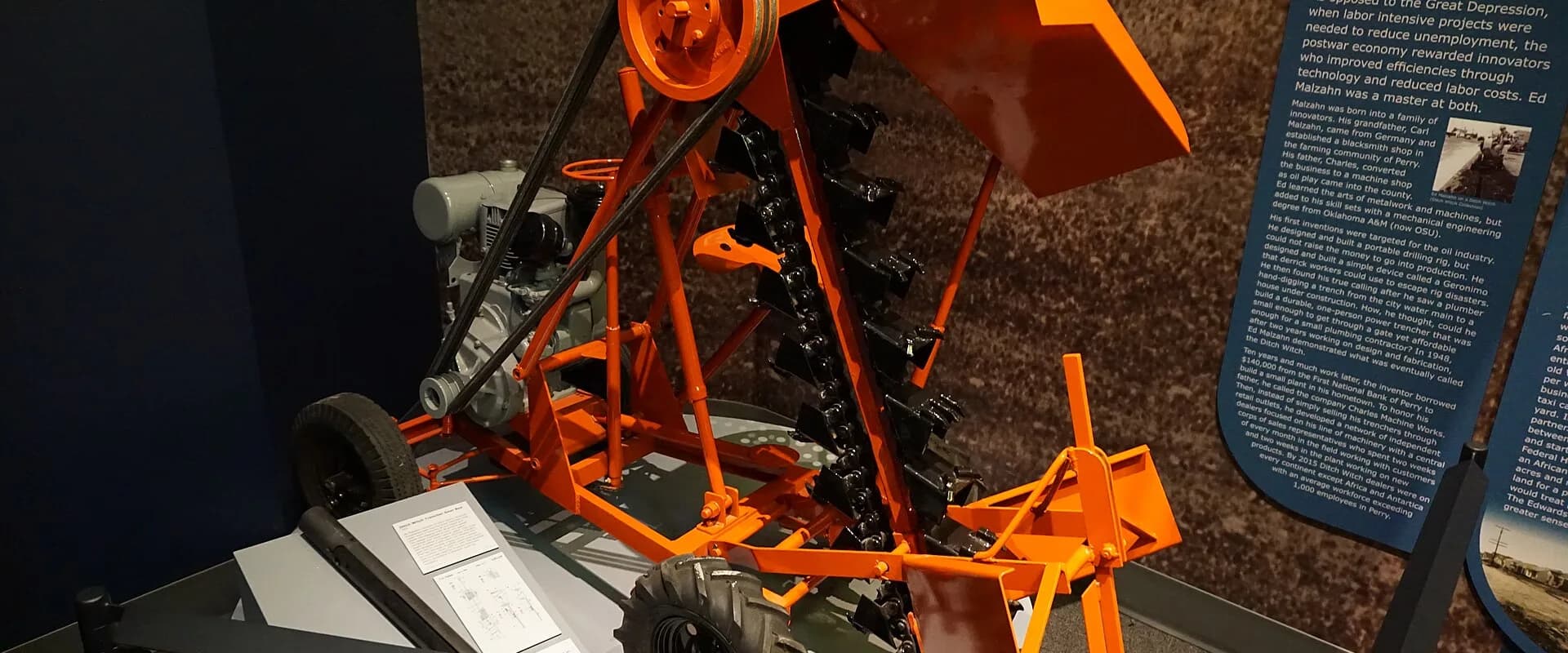
A trencher cuts a narrow trench by driving a toothed chain around a boom, or by pulling a blade through the ground on a vibratory plow. Chain trenchers cut a defined width and depth and produce spoil; vibratory plows slice a slit and pull cable or pipe through it without excavating. Combination units do both and often carry a backhoe as well.
Trenchers are described by the depth and width they cut, and by whether they are walk-behind, ride-on or tractor-sized. Walk-behind machines handle shallow irrigation and cable work; ride-on combination units are the volume segment for utility contractors; heavy chain trenchers cut deep for main lines and are a specialist market.
Where these machines usually come from
- Utility installation — water, gas, electrical and fibre
- Irrigation and drainage runs
- Landscape lighting and low-voltage cable
- Fibre and telecoms installation, where plows dominate
- Rental fleet duty, which supplies much of the used market
Trenchers we buy
Configuration changes who the next buyer is, so it changes the offer. These are the variants worth naming when you describe your machine.
- Walk-behind trencher
- Compact, for shallow work. Easy to transport and popular with landscapers and rental yards.
- Ride-on trencher
- Larger, faster and usually more capable in depth. The general-purpose contractor machine.
- Combination unit (trencher, plow and backhoe)
- One machine covering trenching, plowing and small excavation. The most sought-after configuration in utility work because it does a whole job.
- Vibratory plow
- Slices and pulls cable or pipe without excavating. Dominant in fibre and irrigation, and priced on blade and vibration system condition rather than chain.
- Rock and heavy chain trenchers
- Built for hard ground with rock teeth and heavier drive. A narrow but motivated buyer pool.
What determines a used trencher's value
Roughly in order of how much each one moves the number.
- 1
Chain, teeth and sprocket condition
The consumable heart of a chain trencher and the first thing checked. Worn teeth, stretched chain and hooked sprockets mean the machine cuts slowly and badly. A full chain and tooth replacement is a known cost that buyers price directly.
How to check it: Look at tooth carbide for rounding and loss, check chain stretch and side plate wear, and look at sprocket tooth profile for hooking.
- 2
Boom and headshaft condition
The boom carries the chain and the headshaft drives it. A bent boom or worn headshaft bearings mean the chain runs off track and wears unevenly, which is a repair rather than a consumable.
How to check it: Sight along the boom for straightness and check for play at the headshaft.
- 3
Attachment set
A machine with trencher, backfill blade, plow and backhoe attached is worth substantially more than a bare trencher, because it covers a whole utility job. Attachments on this class are frequently separated from the machine over the years.
- 4
Drive system condition
Most modern trenchers are hydrostatic. Weak tracking, uneven drive between sides, or a machine that will not hold speed under load points at pump or motor wear, which is a significant repair.
- 5
Vibration system, on plows
A plow that will not vibrate cannot pull cable through undisturbed ground. The vibratory box, its bearings and drive are the equivalent of the chain system on a trencher and are checked the same way.
- 6
Engine condition and hours
Trenchers work at sustained load. Hard starting, low power or excessive smoke all point at engine work, and on a machine this size that is a meaningful share of its value.
- 7
Tyres or tracks
Rubber tracks on tracked units and tyres on wheeled ones are both real costs, and trenchers work on ground that is hard on both.
- 8
Trailer, on tow-behind and rental units
Many trenchers come with a matched trailer. If yours does, say so — it is worth listing, and it simplifies collection.
How usage is measured
Engine hours. As with chippers, trenchers work in bursts and often sit, so moderate hours on an older machine are normal. Ground conditions matter far more than the meter: a machine that has cut rock and decomposed granite has worn its chain, teeth and sprockets many times faster than one in sandy loam.
What gets inspected on a trencher
Knowing what a buyer looks at lets you describe the machine accurately the first time, which avoids the offer changing later.
Digging chain and teeth
Carbide condition and loss, chain stretch and side plate wear, tooth holder condition, and sprocket profile.
Boom and headshaft
Boom straightness, headshaft bearing play, chain tensioner function, and boom pivot wear.
Drive system
Hydrostatic drive performance under load, even tracking, drive motor noise, and hydraulic leaks.
Attachments
Backfill blade condition, plow blade wear, backhoe pin play where fitted, and attachment mounting integrity.
Engine and cooling
Cold start, power under load, smoke, and radiator cleanliness — trenchers pack radiators with spoil.
Chassis and running gear
Tyre or track condition, frame cracks around the boom mount, and trailer condition where included.
Wear items that dominate cost on this class
What we need to price your trencher
You do not need all of it to start. The more of it you have, the closer the first number is to the final one.
- Make, model and serial number
- Year and hour meter reading
- Machine type — walk-behind, ride-on, combination, or plow
- Cutting depth and width capability
- Chain and teeth condition, or when last replaced
- Attachments included — backfill blade, plow, backhoe
- What ground it mostly cut — soil, rock, decomposed granite
- Tyre or track condition
- Whether a trailer is included
- Whether it starts, drives and digs
Common situations
The circumstances that come up most often when someone sells a trencher, and what each one actually means for the sale.
The chain and teeth are worn out
Expected on a working trencher and not worth replacing to sell. Chain and teeth are consumables with a known replacement cost, and buyers factor them in as a matter of routine. Describe the condition instead.
The attachments are scattered around the yard
Gather them and list them. A combination machine sold complete is worth considerably more than the same machine sold bare, and attachments left behind are frequently worth less separately than they add to the machine.
It cut rock or decomposed granite
Say so. Hard ground wears the entire digging system many times faster than soil, and it is the first thing a buyer would assess anyway. Being upfront produces a firm number instead of a defensive one.
A rental yard clearing older units
Send the list with models, hours and attachment sets. Rental trenchers usually have consistent servicing and often come with matched trailers, which makes them straightforward to price and collect as a group.
It will not start or drive
Still bought. Say which system stopped — engine, drive or the digging system — and roughly when. You do not need to work out the cause.
Moving a trencher
Walk-behind and small ride-on trenchers travel on a standard trailer, often on their own matched trailer if one is included. Larger chain trenchers go on a deck-over or lowboy. Nothing in this category is normally an oversize load. Machines that will not drive are winched on. Transport is arranged and paid for by us and is inside the offer.
Ownership and paperwork
Trenchers are equipment, not vehicles, and are not titled in California. Ownership transfers by bill of sale against the serial number. If a matched trailer is included, that trailer is titled separately and its title should come with it — a commonly forgotten detail on this category.
Attachments and extras
Backfill blades, vibratory plow attachments, backhoe attachments, spare chains and teeth, rock chains, boring attachments and trailers all count. Attachment sets make a much larger difference to value here than on most categories, so list everything, including spares.
Makes and model families we see most
We buy trenchers from manufacturers beyond this list. These are the ones that come up most often, with the series a seller is likely to recognise from the machine.
| Manufacturer | Model families |
|---|---|
| Ditch Witch | RT, C and Zahn ranges — the dominant name in the category |
| Vermeer | RTX ride-on trenchers and LM plows |
| Toro | TRX walk-behind trenchers and plows |
| Case | Trencher attachments and dedicated units |
| Barreto | Walk-behind and ride-on trenchers, common in rental |
| Astec | Heavy chain trenchers and rock trenchers |
Get a cash offer
Get an offer on your trencher
Tell us what you have and what shape it is in. We come back with a cash figure in writing.
- A written offer, not an estimate
- Transport arranged and priced into the offer
- Running or not, any make
Prefer to talk it through?
(916) 740-7755Get a Cash Offer
Any brand, any condition, any hours.
- Written offer
- Transport arranged
- No Spam
Where we buy trenchers
We buy across California. Our published town-level coverage is concentrated in these counties.