We buy drill rigs
Sell Your Drill
Directional, water well and rock drills — priced on rotation and thrust systems, and on the tooling package.
- Written offers
- Transport arranged
- Running or not
- California
On this page
MachineryBarn buys used drilling equipment — horizontal directional drills, water well rigs, blasthole and rock drills, and foundation and auger rigs. Drills are valued on the rotation and thrust systems and on what tooling comes with them. On a directional drill the tooling and the locating system can represent a large share of what the buyer is actually paying for, and a rig sold without its rods, reamers and locator is a substantially smaller sale than the same rig sold complete.
What counts as a drill
Drilling equipment bores holes for utilities, water, foundations or blasting. Horizontal directional drills bore a steerable path under obstacles and pull product back through it. Vertical rigs drill down for water, foundations or blast patterns. What they share is a rotation system, a thrust or pulldown system, and a tooling string that is specific to the rig.
Directional drills are described by thrust and pullback force and by rotary torque — the pullback figure is what most buyers quote. Vertical rigs are described by depth capability and hole diameter. In both cases the rating assumes ideal ground; what the rig achieved in the formations it actually worked is more useful information.
Where these machines usually come from
- Trenchless utility installation — fibre, gas, water and electrical
- Water well drilling
- Foundation and pile work on auger and caisson rigs
- Blasthole drilling in quarries and mines
- Geotechnical and environmental investigation
Drill Rigs we buy
Configuration changes who the next buyer is, so it changes the offer. These are the variants worth naming when you describe your machine.
- Horizontal directional drill (HDD)
- Steerable boring for trenchless utility work. The largest used market in this category, driven by fibre and utility installation.
- Water well rig
- Vertical drilling for water. Usually truck-mounted, with its own compressor and mud system, and a specialist buyer pool.
- Blasthole / rock drill
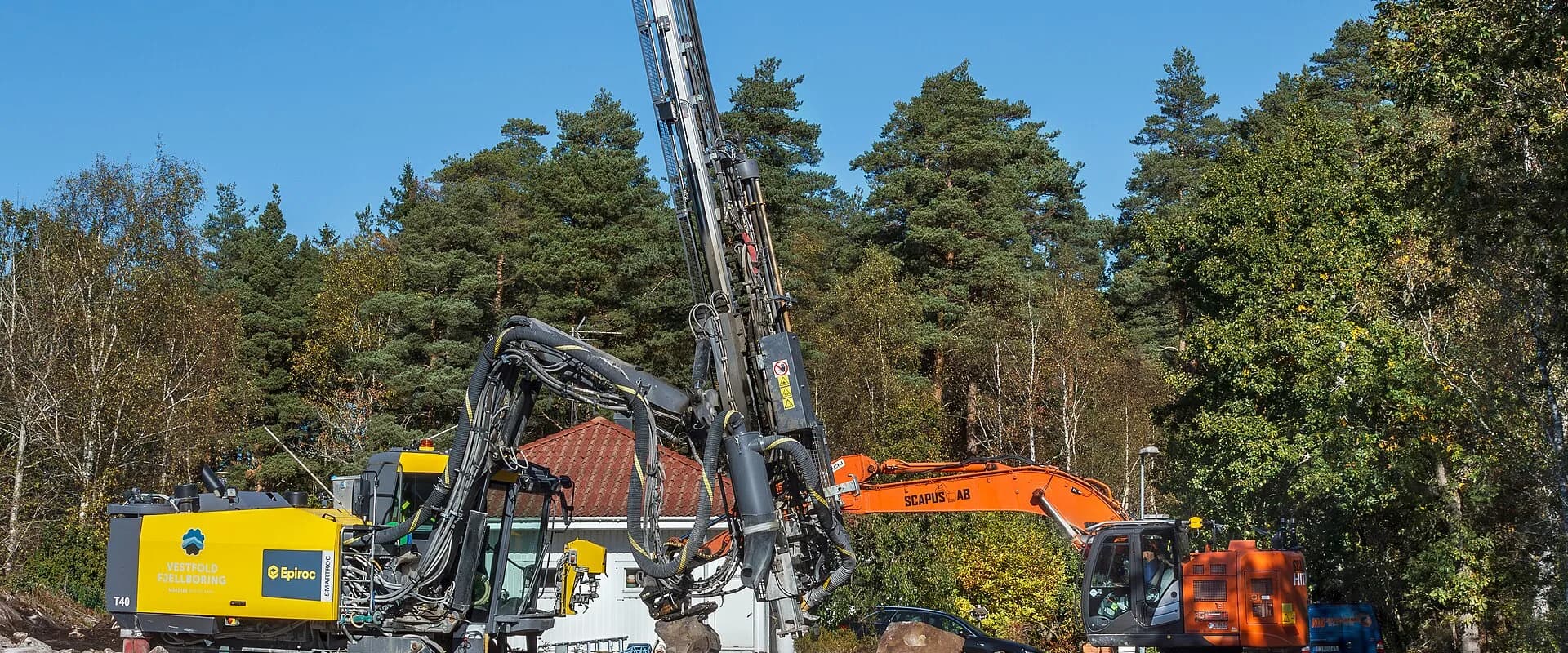
- Track-mounted percussion drilling for quarry and mine blast patterns. Priced heavily on the hammer, drifter and compressor.
- Auger and foundation rig
- Large-diameter vertical drilling for piles and caissons. High value and demanding transport.
- Support equipment
- Mud mixing systems, vacuum excavators, locating equipment and rod trailers. Frequently sold with the rig and worth listing.
What determines a used drill's value
Roughly in order of how much each one moves the number.
- 1
Tooling package
Frequently the largest variable. Drill rods, reamers, bits, swivels, subs and the locating system are all rig-specific and all expensive. A drill sold complete with a full rod string and a working locator is a very different sale from a bare rig, and it is the single thing most worth getting right in the listing.
How to check it: Count the rods and note their condition and length. State the locator make and model and whether it works.
- 2
Rotation and thrust system condition
The core mechanicals. Weak rotation torque, a thrust system that will not pull rated load, or a worn rack and pinion drive are all major repairs on a drill rig.
How to check it: Run the rig through rotation and thrust cycles and watch for weakness, hesitation or unusual noise.
- 3
Drill rod condition
Rods are consumables and they are expensive. Bent rods, worn threads and rods near the end of their fatigue life are common on a working rig, and a full replacement string is a substantial cost.
How to check it: Check thread condition on a sample of rods and look for bends and wear at the tool joints.
- 4
Hydraulic system health
Drills work at sustained high pressure. Weak pumps, contaminated oil and a cooling system that cannot keep up are all expensive findings on a machine this hydraulically dependent.
- 5
Mud system and pumps
Drilling fluid systems — pumps, mixers, tanks and hoses — are essential to directional and water well work and they wear from abrasive fluid. A rig with a tired mud pump needs real money spent before it works.
- 6
Undercarriage or carrier
Track-mounted rigs carry the same undercarriage economics as any tracked machine. Truck-mounted rigs bring the chassis with them, including California registrability considerations for the truck.
- 7
Locating and guidance system
On a directional drill the locator is essential and expensive, and it is frequently a separate purchase that stays with the operator rather than the rig. State clearly whether it is included.
- 8
Hours, engine and emissions tier
Standard off-road diesel considerations including California's fleet rules. On truck-mounted rigs the carrier is a commercial vehicle with its own registrability question.
How usage is measured
Engine hours, plus rotation or drilling hours where the rig records them separately. Ground conditions matter more than the meter on this category: a rig that worked rock and cobble has consumed tooling and stressed the rotation system far harder than one boring sandy soil, and it shows throughout.
What gets inspected on a drill
Knowing what a buyer looks at lets you describe the machine accurately the first time, which avoids the offer changing later.
Rotation system
Torque under load, gearbox oil condition and noise, spindle and sub condition, and any play in the rotary drive.
Thrust and pullback
Rated force achievable, rack and pinion or chain wear, carriage guide condition, and cylinder function.
Tooling
Rod count and thread condition, bend and fatigue, reamer and bit wear, and sub and swivel condition.
Mud system
Pump condition and output, mixer function, tank and hose integrity, and valve wear.
Hydraulics and cooling
Oil condition, pump noise, cycle performance under load, and cooler cleanliness.
Carrier
Undercarriage on tracked rigs; chassis, engine and title on truck-mounted rigs.
Wear items that dominate cost on this class
What we need to price your drill
You do not need all of it to start. The more of it you have, the closer the first number is to the final one.
- Make, model and serial number
- Year and hour meter reading
- Rig type — directional, water well, rock, auger
- Rated thrust and pullback, or depth capability
- Rod count, length and condition
- Whether a locating system is included, and its make and model
- Mud system and pumps included
- What ground it drilled — sand, clay, rock, cobble
- Track or truck mounted, and carrier condition
- Whether it starts and drills
Common situations
The circumstances that come up most often when someone sells a drill, and what each one actually means for the sale.
The locator belongs to the operator, not the rig
Say so up front. Locating systems are expensive and are the item most often assumed to be included on a directional drill. A rig priced as though it includes a locator and delivered without one is the most common dispute in this category.
The rods are worn or bent
Expected on a working rig and priceable. Rods are consumables with a known replacement cost. Give us a count and an honest condition rather than replacing any — you will not recover the outlay.
It drilled in rock and cobble
Worth stating. Hard formations consume tooling and stress the rotation and thrust systems far faster than soft ground, and it is exactly what an inspection would assess. Disclosing keeps the offer firm.
A utility contractor closing or downsizing
Send the whole outfit — the drill, rod trailers, mud system, vacuum excavator, locating equipment and support trucks. Drilling spreads move far better as a working package than as separate pieces.
It will not start or drill
Still bought. Say which system stopped — engine, hydraulics, rotation or thrust — and roughly when. You do not need to diagnose it.
Moving a drill
Track-mounted directional drills travel on a lowboy or deck-over depending on size. Truck-mounted rigs drive themselves if the carrier is registered and running. The complication on this category is usually the support equipment: rod trailers, mud systems and vacuum excavators are separate items that need collecting too, so tell us what the full package includes. Transport is arranged and paid for by us and is inside the offer.
Ownership and paperwork
Track-mounted drills are equipment and are not titled in California; ownership transfers by bill of sale against the serial number. Truck-mounted rigs bring a titled vehicle with them, so the carrier transfers through the DMV with any lien on the title. Rod trailers are separately titled — a detail frequently forgotten until collection.
Attachments and extras
Drill rods, reamers, bits, swivels, subs, locating systems, mud pumps and mixers, rod trailers and vacuum excavators all count and all should be listed individually with a clear yes or no on inclusion. On this category the tooling and support package can rival the rig in value.
Makes and model families we see most
We buy drill rigs from manufacturers beyond this list. These are the ones that come up most often, with the series a seller is likely to recognise from the machine.
| Manufacturer | Model families |
|---|---|
| Vermeer | D-series directional drills — D20, D24, D40, D60, D100 |
| Ditch Witch | JT series directional drills |
| American Augers | Directional drills and auger boring machines |
| Epiroc | Blasthole and rock drilling rigs |
| Sandvik | Surface and underground drill rigs |
| Atlas Copco | Rock drills and blasthole rigs |
| Bauer | Foundation and auger rigs |
Get a cash offer
Get an offer on your drill
Tell us what you have and what shape it is in. We come back with a cash figure in writing.
- A written offer, not an estimate
- Transport arranged and priced into the offer
- Running or not, any make
Prefer to talk it through?
(916) 740-7755Get a Cash Offer
Any brand, any condition, any hours.
- Written offer
- Transport arranged
- No Spam
Where we buy drill rigs
We buy across California. Our published town-level coverage is concentrated in these counties.