We buy cranes
Sell Your Crane
Rough terrain, boom truck, carry deck and crawler — priced on capacity, boom, counterweight and inspection history.
- Written offers
- Transport arranged
- Running or not
- California
On this page
MachineryBarn buys used cranes — rough terrain, all terrain, boom trucks, carry decks and crawlers. Cranes are the most documentation-sensitive category we handle. Capacity and boom length set the ballpark, but inspection and certification records, a complete counterweight set and the original load charts decide whether a crane can be put straight to work or has to be rehabilitated first, and that difference is substantial. Keep the paperwork with the machine.
What counts as a crane
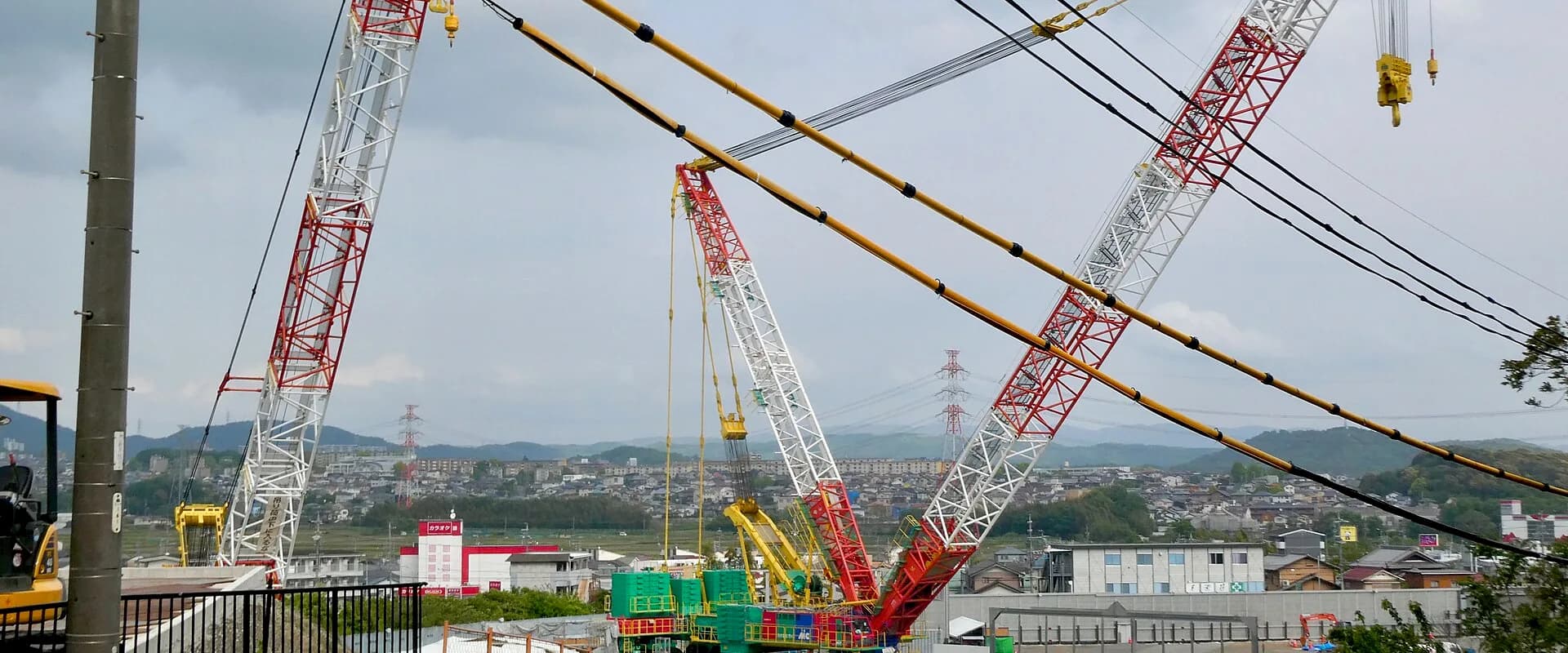
A mobile crane lifts and places loads using a telescopic or lattice boom, with stability provided by outriggers, crawler tracks, or the carrier itself. The type determines almost everything about how it is bought and moved: a rough terrain crane is a single-engine machine for site work, an all-terrain can travel road and site, a boom truck is a crane mounted on a commercial truck chassis, and a crawler crane rides on tracks and usually has to be dismantled to travel.
Cranes are described by maximum rated capacity in tons, but that figure is the capacity at minimum radius with full counterweight and never describes real working capability. What a buyer actually evaluates is the load chart: capacity at working radius and boom length, with the counterweight the machine actually has. A crane missing counterweight is a smaller crane.
Where these machines usually come from
- Steel erection and structural work
- Mechanical, HVAC and equipment setting
- Precast and tilt-up concrete placement
- Utility, substation and infrastructure work
- Bridge and highway construction
- Crane rental fleets, which is where much used inventory originates
Cranes we buy
Configuration changes who the next buyer is, so it changes the offer. These are the variants worth naming when you describe your machine.
- Rough terrain (RT)
- Single cab, four large tyres, built for site work. Not highway legal — it has to be transported between jobs, which is a cost the next owner factors in.
- All terrain (AT)
- Multi-axle carrier that travels the highway and works on site. Two engines and two sets of controls on most units, and correspondingly more to inspect.
- Boom truck / truck-mounted
- Crane on a commercial truck chassis. Titled as a vehicle, which makes the paperwork different from every other crane type.
- Carry deck / industrial
- Small, manoeuvrable, with a deck for carrying the load. Popular in plants and refineries and an easy machine to place.
- Crawler
- Tracks, often a lattice boom, high capacity. Needs to be dismantled for transport — boom sections, counterweights and sometimes the tracks travel separately.
What determines a used crane's value
Roughly in order of how much each one moves the number.
- 1
Inspection and certification history
The most consequential documentation in any category we buy. Cranes are subject to periodic inspection requirements, and a machine with a complete, current inspection record can go to work; one without has to be inspected and rehabilitated before it can earn. The gap between those two positions is large.
How to check it: Gather the annual inspection reports, any third-party or load test certificates, and the wire rope inspection records. Keep them with the machine rather than in an office file.
- 2
Counterweight completeness
Counterweight sections are crane-specific, heavy, and expensive to replace. A crane sold with an incomplete set is derated to whatever the buyer can actually configure, and sourcing missing sections is slow. This is one of the most common ways a crane sale disappoints a seller.
How to check it: Count the sections against the load chart and photograph them. Note whether they are the machine's original matched set.
- 3
Load charts and manuals
The crane cannot legally or practically be operated without its charts. Original charts, the operator manual and any capacity placards should physically stay with the machine. Reproducing them from the manufacturer is possible but slow.
- 4
Boom condition and length
Boom length and configuration determine what work the crane can take. Physically, buyers look hard at the boom sections for dents, straightness and prior repair — boom damage is a structural finding, not a wear item, and it changes the conversation entirely.
How to check it: Sight along each section, check wear pads, and look for any repair or re-plating.
- 5
Jib and attachments
A swingaway or lattice jib extends reach and is frequently sold separately from the crane by accident. If a jib is included, say so; if it is not, say that too.
- 6
Wire rope and hook block condition
Rope is a wear and safety item with defined inspection criteria, and hook blocks are matched to the machine. Both are checked closely, and a crane arriving without its blocks is a smaller sale than expected.
- 7
Load moment indicator and safety systems
A working LMI and anti-two-block system are effectively required for the crane to work. A faulty LMI is a repair the next owner must complete before the machine earns anything, and it is priced accordingly.
- 8
Outriggers and carrier condition
Outrigger cylinders that drift, damaged pads, or a carrier with frame or suspension issues all bear directly on whether the crane can be set up safely.
- 9
Hours, miles and engine condition
Read against the meters described above. On boom trucks the carrier is a commercial truck and everything that applies to trucks — emissions equipment, title, registration — applies here too.
How usage is measured
Cranes usually have more than one meter and you need them all. A rough terrain crane has engine hours; an all terrain or boom truck has carrier miles and carrier engine hours as well as superstructure hours, and the two tell different stories. A boom truck with high road miles and low crane hours has been driven rather than worked, which is generally the better position.
What gets inspected on a crane
Knowing what a buyer looks at lets you describe the machine accurately the first time, which avoids the offer changing later.
Boom
Section straightness, dents, wear pad condition, extension and retraction under load, and any prior repair or re-plating.
Wire rope and reeving
Broken wires, crushing, birdcaging, corrosion, correct reeving, and the condition of the hook block and sheaves.
Safety systems
LMI calibration and function, anti-two-block, load indication accuracy, and boom angle indication.
Outriggers
Cylinder drift, beam wear, pad presence and condition, and level indication.
Slew and hoist
Swing bearing play, swing brake holding, hoist brake function, and drum and gearbox condition.
Carrier
On rough terrain machines, tyres, axles and steering modes. On truck-mounted cranes, everything that applies to a commercial truck including emissions equipment and title.
Wear items that dominate cost on this class
What we need to price your crane
You do not need all of it to start. The more of it you have, the closer the first number is to the final one.
- Make, model, serial number and year
- Crane type — rough terrain, all terrain, boom truck, carry deck, crawler
- Maximum rated capacity and main boom length
- Whether a jib is included, and what type
- Counterweight sections present, against the load chart
- All meter readings — superstructure hours, carrier hours, carrier miles
- Date and outcome of the most recent inspection, and whether reports are available
- Whether the load charts, manuals and placards are with the machine
- LMI and anti-two-block function
- For boom trucks: title status and registration
- Whether it starts, drives and operates, and if not, what stopped it
Common situations
The circumstances that come up most often when someone sells a crane, and what each one actually means for the sale.
The inspection is out of date
Very common on a crane that has been parked, and not a reason to avoid selling. It does affect the offer, because the next owner has to complete inspection and any resulting repairs before the machine can work. Gather whatever historical records exist even if the current certificate has lapsed — a documented history is worth considerably more than none.
Some counterweight is missing
Tell us before an offer is made rather than at collection. Missing counterweight is one of the few things that reliably turns a good crane sale into a difficult one, because the sections are machine-specific and slow to source. An accurate count up front produces a firm number.
The crane has been parked for years
Say how long and whether it was stored under cover. Long-parked cranes need wire rope, hydraulics, seals and safety systems all reassessed, and the outcome depends heavily on storage. This is normal and workable; it just needs to be priced as what it is.
It is a boom truck with a lien on the title
Boom trucks are titled as vehicles, so the lien is on the title itself rather than a UCC filing, and the lender must release it before ownership transfers. Get a current payoff from your lender; it is settled as part of the purchase.
A crane rental company reducing its fleet
Send the list with capacities, boom lengths, meter readings and inspection dates. Fleet cranes usually come with the best documentation in the category, which is exactly what makes them straightforward to price and to move as a group.
Moving a crane
The hardest logistics of any category we buy, and it varies enormously by type. A carry deck travels on a standard trailer. A rough terrain crane needs a lowboy and often an oversize permit. A crawler crane usually has to be dismantled — boom sections, counterweights and sometimes the tracks travel on separate trailers, and reassembly at the other end is part of the job. Boom trucks generally drive themselves if they are registered and running. Tell us the crane type early, because it changes the collection plan more than anything else does. Transport is arranged and paid for by us and is already inside the offer.
Ownership and paperwork
Crane paperwork splits two ways. Boom trucks and truck-mounted cranes are titled vehicles, transferred through the DMV with any lien recorded on the title. Rough terrain, carry deck and crawler cranes are not titled — ownership transfers by bill of sale against the serial number, with financing appearing as a UCC filing. In both cases, the inspection records, load charts and manuals should physically go with the machine. They are not administrative extras on a crane; they are part of what is being sold.
Attachments and extras
Jibs, hook blocks, headache balls, outrigger pads, counterweight sections, rigging and spreader bars all need listing individually, with a clear yes or no on inclusion. Cranes suffer more than any other category from items being assumed included, because so much of the machine's rated capability depends on components that can be physically separated from it.
Makes and model families we see most
We buy cranes from manufacturers beyond this list. These are the ones that come up most often, with the series a seller is likely to recognise from the machine.
| Manufacturer | Model families |
|---|---|
| Grove | RT, TMS and GMK series — the most common rough terrain range in the US market |
| Terex | RT, BT boom trucks and Quadstar carry decks |
| Link-Belt | RTC rough terrain, HTC truck cranes, and lattice crawlers |
| Manitowoc | Lattice crawler cranes across the higher capacity classes |
| Liebherr | LTM all terrain and LR crawler ranges |
| Tadano | GR rough terrain and ATF all terrain |
| National Crane | Boom trucks, widely used in utility work |
| Broderson | Carry deck and industrial cranes |
| Kobelco | Lattice crawler cranes |
Get a cash offer
Get an offer on your crane
Tell us what you have and what shape it is in. We come back with a cash figure in writing.
- A written offer, not an estimate
- Transport arranged and priced into the offer
- Running or not, any make
Prefer to talk it through?
(916) 740-7755Get a Cash Offer
Any brand, any condition, any hours.
- Written offer
- Transport arranged
- No Spam
Where we buy cranes
We buy across California. Our published town-level coverage is concentrated in these counties.