We buy wheel loaders
Sell Your Wheel Loader
Compact through production size — priced on tyres, articulation wear, bucket setup and duty history.
- Written offers
- Transport arranged
- Running or not
- California
On this page
MachineryBarn buys used wheel loaders across every size class, running or not. Loaders are the one earthmoving category where tyres routinely decide the deal: a full set of large loader tyres is among the biggest single line items on the machine, and buyers price the remaining tread before they look at anything else. After tyres, the articulation joint, the bucket and coupler setup, and how the machine spent its life — stockpile loading, quarry face, or snow and yard work — do more to the number than hours alone.
What counts as a wheel loader
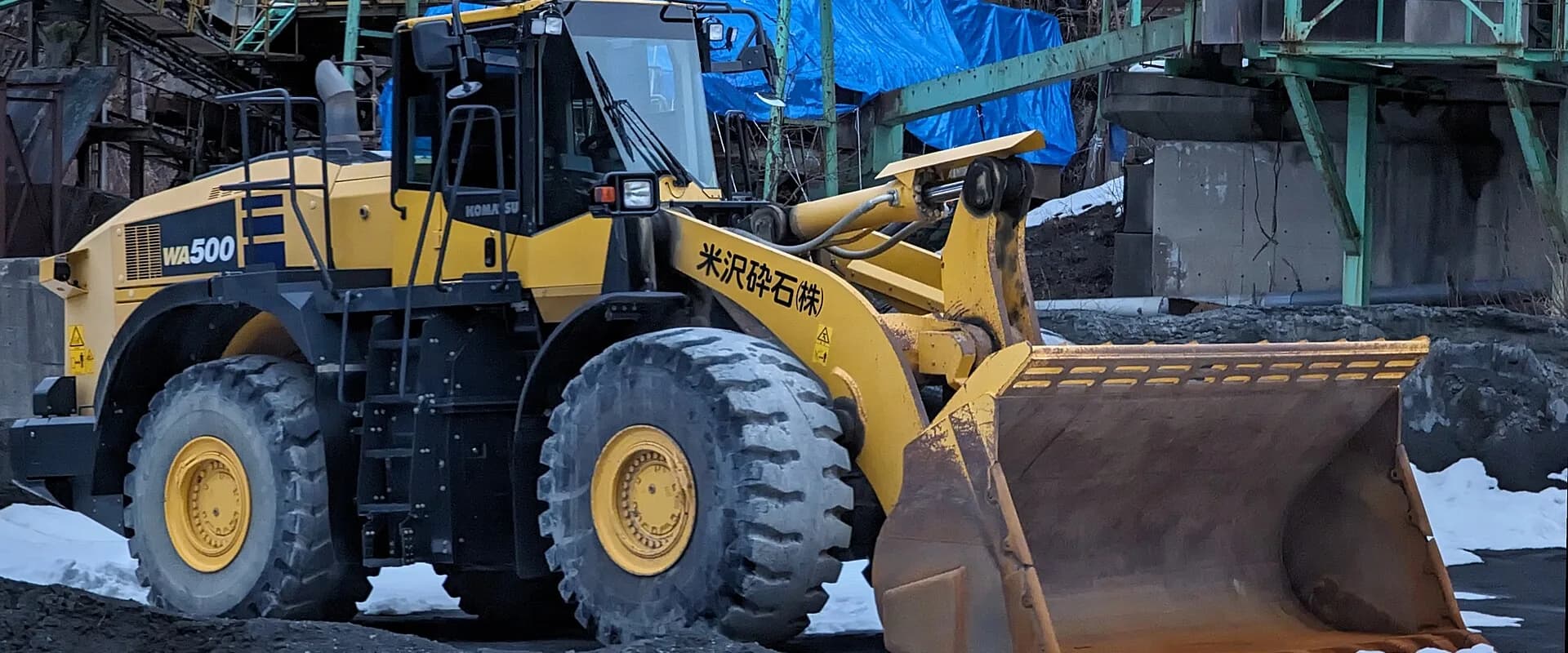
A wheel loader is an articulated rubber-tyred machine that scoops, carries and loads material with a front bucket. It bends in the middle rather than steering at the wheels, which is what makes it manoeuvrable at size, and that centre hinge is also its signature wear point. Loaders are described by bucket capacity in cubic yards and by operating weight, and manufacturers generally encode the class in the model number.
Compact and utility loaders handle landscaping, agriculture and municipal work and compete with large skid steers. The mid-size classes — roughly two to four cubic yards — are the volume segment and suit truck loading and general construction. Production loaders above that serve quarries and mines, where the buyer pool is narrower and transport is a genuine undertaking.
Where these machines usually come from
- Loading trucks from stockpiles at aggregate and materials yards
- Quarry and mine face loading on the larger classes
- General site work, backfilling and material movement
- Agricultural and feedlot work, often with bale or grapple attachments
- Snow removal and municipal yard duty
- Recycling, scrap and waste handling, which is exceptionally hard duty
Wheel Loaders we buy
Configuration changes who the next buyer is, so it changes the offer. These are the variants worth naming when you describe your machine.
- Standard general-purpose loader
- The default configuration: Z-bar or similar linkage, general-purpose bucket, standard lift height.
- Tool carrier
- Parallel-lift linkage designed to run forks, brooms and other attachments accurately. A different machine to a buyer who needs one, and worth stating explicitly.
- High-lift configuration
- Extended lift arms for loading taller trucks and hoppers. Narrower buyer pool but valuable to those who need the reach.
- Waste and scrap handler
- Guarding, solid or foam-filled tyres, and sealed cooling. Purpose-built for a punishing environment, and the specification should be described because it is not obvious from the model number.
- Compact and utility loaders
- Small articulated machines, often with a quick coupler. Popular with agriculture, landscaping and municipalities, and easy to transport.
What determines a used wheel loader's value
Roughly in order of how much each one moves the number.
- 1
Tyre condition
The first thing checked and often the largest single deferred cost on the machine. A full set of large loader tyres is a substantial bill, and a loader on worn or mismatched tyres is priced accordingly regardless of how well the rest of it runs.
How to check it: Note remaining tread on all four, whether the set matches, and any cuts, chunking or sidewall damage. Say whether they are standard, solid, or foam filled.
- 2
Articulation joint and pin wear
The centre hinge is the signature wear point on a wheel loader. Slop there shows up as a machine that wanders and shakes, it accelerates wear everywhere downstream, and it is a real job to put right.
How to check it: With the machine on level ground, articulate slowly full lock to full lock and watch the centre pins for movement and clunk. Check for grease at both the upper and lower pins.
- 3
Bucket, cutting edge and coupler
A sound bucket with a serviceable cutting edge, and a quick coupler that lets the machine run forks and other attachments, both widen the buyer pool. A worn or cracked bucket is a visible and immediate deduction.
- 4
Transmission and torque converter
Slipping, harsh shifts, or a machine that will not pull under load point at transmission or converter wear, which is a major-component cost. It is one of the more expensive things that can be wrong with a loader.
How to check it: Load the bucket and drive up a grade. Listen for converter noise and feel for slip or harshness through the shifts.
- 5
Axles, differentials and brakes
Loaders are hard on driveline components, particularly in quarry work. Wet brakes are common on this class and their condition is not visible from outside, so oil condition and any noise are the available signals.
- 6
Hours and emissions tier
As with other off-road diesel machines, tier matters in California, where state fleet rules shape which older machines a California contractor can practically run. Older machines frequently find stronger buyers out of state or for export.
- 7
Ride control and auxiliary hydraulics
Ride control makes a loader far more usable over distance and buyers ask for it. Third-function hydraulics for grapples, brooms and other attachments similarly widen the market.
- 8
Cab, visibility and climate control
Working air conditioning, sound glass, a good seat and functioning rear-view camera systems all matter on a machine whose operator is in it all day, and they read as a proxy for overall care.
How usage is measured
Engine hours, read against duty. Loaders are engine-hour machines, but what those hours were spent doing matters more here than on most categories. A loader doing quarry face work is loading against a rock pile all day and wears its tyres, linkage and driveline far faster than one moving bark at a landscape yard. Tell us the application.
What gets inspected on a wheel loader
Knowing what a buyer looks at lets you describe the machine accurately the first time, which avoids the offer changing later.
Articulation and steering
Centre pin play, steering cylinder condition and drift, hard-stop damage, and even response both directions.
Tyres and wheels
Tread depth on all four, matched sizes, sidewall cuts, rim damage, and whether tyres are foam filled.
Linkage and bucket
Pin and bushing play through the lift and tilt linkage, bucket cutting edge and corner wear, cracks at the bucket ears, and coupler locking function.
Powertrain
Transmission shift quality, converter noise, axle and differential oil condition, and driveline vibration.
Hydraulics
Lift and tilt drift under load, cycle times, hose condition, and leaks at the centre section where lines cross the hinge.
Frame and structure
Cracks at the loader tower and rear frame, prior weld repair, ROPS integrity, and counterweight security.
Wear items that dominate cost on this class
What we need to price your wheel loader
You do not need all of it to start. The more of it you have, the closer the first number is to the final one.
- Make, model and serial number
- Year and hour meter reading
- Bucket size and type, and whether a quick coupler is fitted
- Tyre condition on all four, and whether they are foam filled
- What the machine was used for — stockpile, quarry face, agriculture, snow, waste
- Whether ride control and auxiliary hydraulics are fitted
- Any additional attachments included, such as forks or a grapple
- Cab condition and whether the air conditioning works
- Known transmission, axle or hydraulic issues
- Whether it starts, drives and lifts
Common situations
The circumstances that come up most often when someone sells a wheel loader, and what each one actually means for the sale.
The tyres are worn out
Do not buy a new set to sell the machine. Loader tyres are expensive and you will not recover the outlay in the sale price. Describe them accurately instead — buyers deduct predictably for known-worn tyres and much more aggressively for unknown ones.
The machine worked a quarry or a recycling yard
Worth stating plainly. Those are the hardest applications a loader sees and it shows in the tyres, the linkage and the cooling package. Disclosing it produces a firm offer; leaving it to be discovered produces a re-cut one.
The transmission slips
Still bought. A loader with a tired transmission has a clear market — the rest of the machine has real value and the parts market is deep. Say what it does and when it started rather than diagnosing it.
It is a municipal or fleet machine with low hours
Often the strongest position in this category. Municipal loaders tend to be well maintained, lightly worked and documented. Send whatever service records exist — on this class they genuinely move the number.
You have forks, a grapple or a snow bucket as well
List them. Attachments broaden the buyer pool and are frequently worth more sold with the machine than separately, particularly if the loader has the coupler and hydraulics to run them.
Moving a wheel loader
Mid-size loaders travel on a lowboy or RGN and usually need the bucket removed to stay within legal width — that is routine rather than a complication. Larger production loaders need the bucket off and an oversize permit, and the biggest classes may travel in more than one load. Compact loaders go on a standard deck-over trailer. A loader that will not drive is winched, which needs to be known beforehand so the right trailer arrives. Transport is arranged and paid for by us and is already inside the offer.
Ownership and paperwork
Wheel loaders are not titled in California. Ownership transfers by bill of sale against the serial number, usually stamped on the rear frame and repeated on a plate in the cab. Financing is common at this value and normally appears as a UCC filing rather than on a title; any payoff is settled as part of the purchase.
Attachments and extras
Buckets of different sizes, pallet forks, grapples, brooms, snow buckets and material handling arms all count and all should be listed. Note the coupler type, because attachments are only useful to a buyer whose machine can mount them — a coupler mismatch turns an included attachment into scrap value.
Makes and model families we see most
We buy wheel loaders from manufacturers beyond this list. These are the ones that come up most often, with the series a seller is likely to recognise from the machine.
| Manufacturer | Model families |
|---|---|
| Caterpillar | 900-series — 926, 930, 938, 950, 962, 966, 972, 980, 988 |
| John Deere | 444, 524, 544, 624, 644, 724, 744, 844 |
| Komatsu | WA series — WA270, WA320, WA380, WA470, WA500 |
| Volvo | L-series — L60, L90, L110, L120, L150, L180 |
| Case | 521, 621, 721, 821, 921 |
| Hitachi | ZW series |
| Kubota | R-series compact articulated loaders |
| Liebherr | L-series |
| Doosan / Develon | DL series |
Get a cash offer
Get an offer on your wheel loader
Tell us what you have and what shape it is in. We come back with a cash figure in writing.
- A written offer, not an estimate
- Transport arranged and priced into the offer
- Running or not, any make
Prefer to talk it through?
(916) 740-7755Get a Cash Offer
Any brand, any condition, any hours.
- Written offer
- Transport arranged
- No Spam
Where we buy wheel loaders
We buy across California. Our published town-level coverage is concentrated in these counties.