We buy telehandlers
Sell Your Telehandler
Telescopic handlers priced on the load chart — capacity at reach, boom condition and attachment fit.
- Written offers
- Transport arranged
- Running or not
- California
On this page
MachineryBarn buys used telehandlers — telescopic handlers, sometimes called reach forklifts or zoom booms — running or not. A telehandler is priced on its load chart rather than on a single capacity number, because what it can lift depends entirely on how far out and how high the boom is. The most common mistake sellers make here is quoting the maximum capacity figure, which applies only with the boom retracted and tells a buyer almost nothing about the work the machine can do.
What counts as a telehandler
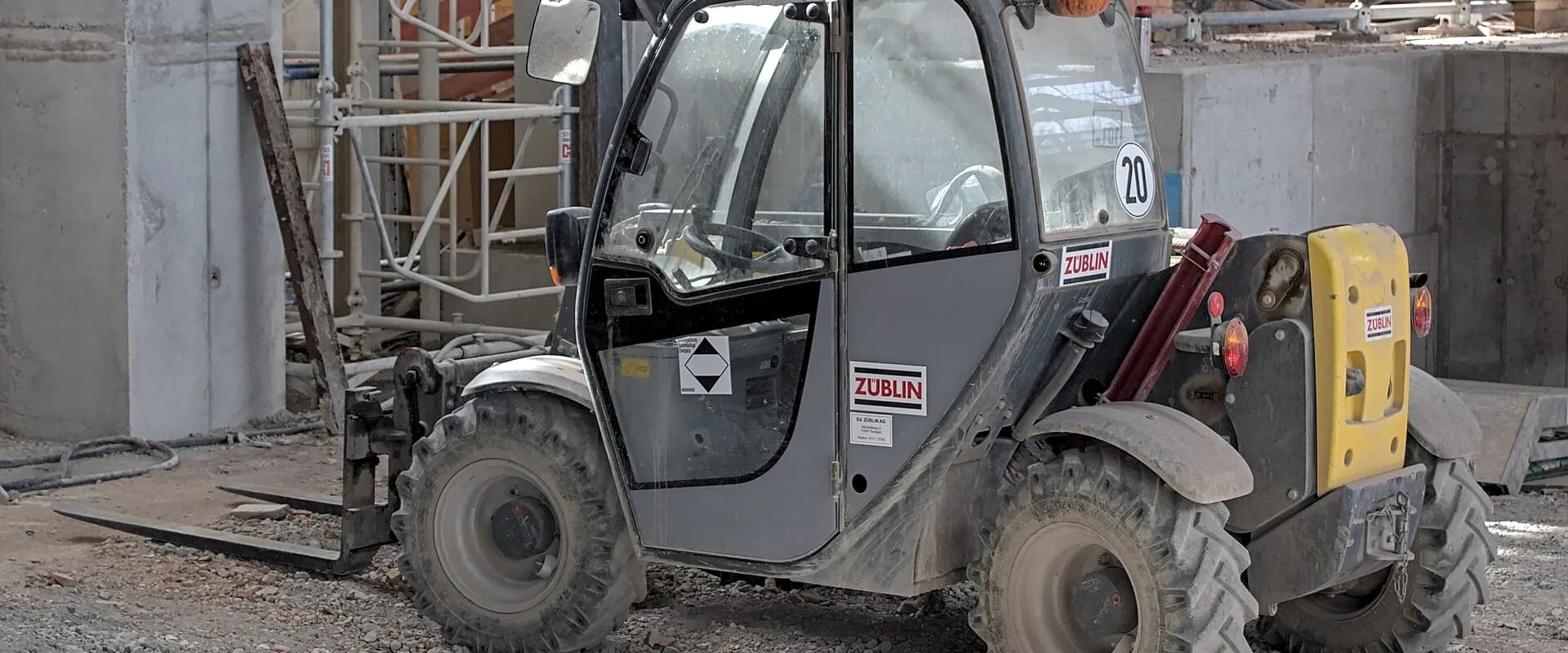
A telehandler is a rough-terrain machine with a telescopic boom that extends forward and upward from behind the cab, carrying forks or an attachment on the end. It combines the reach of a small crane with the material handling of a forklift, which is why it has largely replaced rough-terrain forklifts on construction sites. The distinguishing feature against a forklift is the boom: a forklift has a vertical mast, a telehandler does not.
Telehandlers are described by maximum lift capacity and maximum lift height — commonly seen as figures like 6,000 lb at 42 feet. Both numbers are maxima that do not occur together. The load chart in the cab shows what the machine actually lifts at each combination of height and reach, and that chart is what a buyer evaluates.
Where these machines usually come from
- Placing material on multi-storey construction sites
- Masonry, framing and roofing supply handling
- Agricultural work, particularly with bale and bucket attachments
- Industrial and plant maintenance
- Rental fleet duty, which supplies much of the used market
- Steel erection support and general site logistics
Telehandlers we buy
Configuration changes who the next buyer is, so it changes the offer. These are the variants worth naming when you describe your machine.
- Standard construction telehandler
- Fixed-frame, four-wheel drive, multiple steering modes. The general-purpose configuration and the widest resale market.
- High-capacity / high-reach
- Larger machines reaching higher or lifting more. Narrower buyer pool but strong demand where the reach is needed.
- Rotating telehandler
- The turret rotates, allowing placement without repositioning the machine. A specialist and considerably more valuable machine — say if you have one.
- Compact telehandler
- Smaller frame for tight sites and agricultural buildings. Easy to transport and popular with smaller contractors.
- Agricultural specification
- Different attachment carriage, often higher travel speed and different tyres. A distinct market from construction machines.
What determines a used telehandler's value
Roughly in order of how much each one moves the number.
- 1
Capacity at reach — the load chart
The defining specification. Two machines with the same headline capacity can have very different charts, and buyers who need reach at load will check before anything else. A machine with its original chart legible in the cab is worth more than one without.
How to check it: Photograph the load chart placard in the cab. If it is missing or illegible, note that — replacements come from the manufacturer against the serial number.
- 2
Boom condition and wear pads
The boom is the machine. Dents, bends, prior repair or worn wear pads all bear on whether it extends smoothly and safely, and boom damage is a structural finding rather than a wear item.
How to check it: Extend and retract the boom fully and watch for binding, jerking or unusual noise. Sight along each section for straightness.
- 3
Attachment carriage and attachments included
Carriages are not universal across manufacturers. Forks, buckets, truss booms, work platforms and rotators all add value but only to a buyer whose machine can mount them. State the carriage type and list what is included.
- 4
Frame levelling and stabilisers
Frame sway or levelling lets the machine work on uneven ground, and outriggers on larger units extend the load chart substantially. Both are worth listing, and both are checked for drift.
- 5
Tyres
Large foam-filled or solid rough-terrain tyres are a meaningful cost, and telehandlers work on the sort of ground that destroys them. A full set is a real expense to the next owner.
- 6
Steering modes and four-wheel drive
Two-wheel, four-wheel and crab steer are expected on a construction telehandler and buyers test all three. A machine stuck in one mode has a hydraulic or electrical fault that will be found.
- 7
Hours, engine and emissions tier
Standard off-road diesel considerations apply, including California's fleet rules for older machines. Engine condition matters, but on this class the boom and chart usually decide the sale first.
- 8
Cab and safety systems
Enclosed cab with working climate control is worth a premium. Load moment indication where fitted must function, and it is checked.
How usage is measured
Engine hours. Telehandlers commonly come out of rental fleets where hours accumulate quickly, so a high reading is normal for the category. Rental history is generally a positive here because fleet servicing tends to be consistent and documented.
What gets inspected on a telehandler
Knowing what a buyer looks at lets you describe the machine accurately the first time, which avoids the offer changing later.
Boom
Section straightness, dents, wear pad condition, smooth extension and retraction, and any prior repair.
Attachment carriage
Carriage type, tilt cylinder condition and drift, quick-attach locking function, and fork wear where forks are fitted.
Frame levelling and stabilisers
Sway cylinder drift, outrigger deployment and holding, and level indication accuracy.
Drivetrain and steering
Four-wheel drive engagement, all three steering modes, axle oil condition, and transmission shift quality.
Hydraulics
Boom drift under load, cycle times, hose condition along the boom, and leaks at the extend cylinder.
Safety and documentation
Load chart legibility, load moment indication where fitted, seat belt and interlocks, and lighting.
Wear items that dominate cost on this class
What we need to price your telehandler
You do not need all of it to start. The more of it you have, the closer the first number is to the final one.
- Make, model and serial number
- Year and hour meter reading
- Maximum capacity and maximum lift height
- Whether the load chart is present and legible
- Attachment carriage type
- Attachments included — forks, bucket, truss boom, platform
- Whether it has frame levelling and outriggers
- Tyre condition, and whether foam filled
- Cab or open canopy, and air conditioning function
- Whether all steering modes work
- Whether it starts, drives and lifts
Common situations
The circumstances that come up most often when someone sells a telehandler, and what each one actually means for the sale.
The load chart is missing
Flag it before an offer. The chart is not decoration — the machine cannot be safely or legally operated without one, and the next owner has to obtain a replacement from the manufacturer against the serial number. It is workable, but it affects the number.
It came out of a rental fleet with high hours
Common and generally fine. Rental telehandlers are usually serviced on schedule and documented. Send whatever records exist — on this class, documented maintenance offsets a high hour reading more than most sellers expect.
The boom is slow or jerky on extension
Usually wear pads, sometimes hydraulics. Tell us what it does rather than what you think it is — a machine that binds on extension gets inspected either way, and describing the symptom accurately keeps the offer firm.
You have a machine plus a pile of attachments
List everything, and note the carriage type. Attachments only transfer value to a buyer whose machine can mount them, so a carriage match is what turns an attachment into money rather than scrap.
It will not start or drive
Still bought. Say which system stopped — engine, drivetrain or hydraulics — and roughly when. You do not need to diagnose it.
Moving a telehandler
Telehandlers travel on a lowboy or deck-over trailer depending on size. The usual consideration is height and length with the boom retracted, and on larger machines the forks or attachment may come off to travel. Nothing in this class is normally an oversize load. Machines that will not drive are winched on. Transport is arranged and paid for by us and is already inside the offer.
Ownership and paperwork
Telehandlers are not titled in California. Ownership transfers by bill of sale against the serial number, usually found on the frame near the boom pivot. Financing and lease arrangements are common on this class because so many machines come through rental channels — confirm you own the machine outright before selling, and expect any finance to appear as a UCC filing.
Attachments and extras
Forks, buckets, truss booms, work platforms, grapples, sweepers and rotating carriages all count. The critical detail is the carriage standard, because attachments are not interchangeable across manufacturers. State the carriage type alongside the attachment list.
Makes and model families we see most
We buy telehandlers from manufacturers beyond this list. These are the ones that come up most often, with the series a seller is likely to recognise from the machine.
| Manufacturer | Model families |
|---|---|
| JCB | Loadall — 507, 509, 510, 512, 540, 555 |
| Genie | GTH series |
| JLG | G-series and SkyTrak — 642, 943, 1055, 1255 |
| Caterpillar | TL and TH series |
| Bobcat | V and TL series |
| Manitou | MT series, including rotating models |
| Merlo | Roto and Turbofarmer ranges |
| Xtreme | High-capacity telehandlers |
Get a cash offer
Get an offer on your telehandler
Tell us what you have and what shape it is in. We come back with a cash figure in writing.
- A written offer, not an estimate
- Transport arranged and priced into the offer
- Running or not, any make
Prefer to talk it through?
(916) 740-7755Get a Cash Offer
Any brand, any condition, any hours.
- Written offer
- Transport arranged
- No Spam
Where we buy telehandlers
We buy across California. Our published town-level coverage is concentrated in these counties.