We buy sweepers
Sell Your Sweeper
Broom, regenerative air and vacuum sweepers — priced on sweeping system function and chassis condition.
- Written offers
- Transport arranged
- Running or not
- California
On this page
MachineryBarn buys used sweepers — mechanical broom, regenerative air and pure vacuum street sweepers, plus parking lot machines and sweeper attachments. The sweeping system type is the first question, because mechanical, air and vacuum machines serve different work and different buyers. After that it is a short list: whether the sweeping system actually picks up, hopper and conveyor condition, and on truck-mounted machines the same California registrability question that applies to any commercial chassis.
What counts as a sweeper
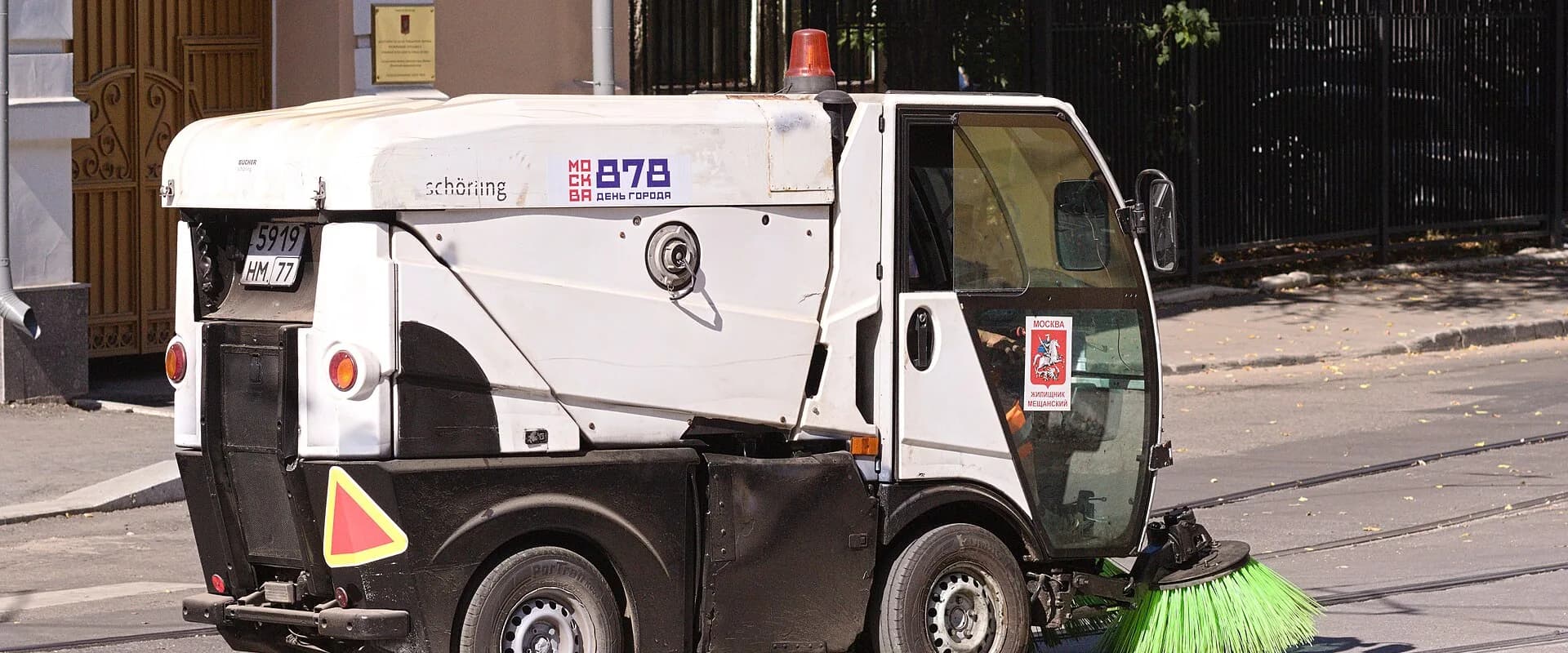
A sweeper collects debris from a paved surface into an onboard hopper. Mechanical broom machines use a rotating main broom to throw material onto a conveyor. Regenerative air machines blast air at the surface and recirculate it to lift debris. Pure vacuum machines draw debris directly into the hopper. Each handles different material and different regulatory requirements.
Sweepers are described by hopper capacity in cubic yards and by sweeping path width. Truck-mounted machines on a commercial chassis handle municipal and highway work; compact and three-wheel machines handle parking lots and tight sites. Sweeper attachments for skid steers and loaders are a separate and much smaller market.
Where these machines usually come from
- Municipal street sweeping
- Construction site cleanup and track-out control
- Parking lot and commercial property maintenance
- Highway and roadway maintenance contracts
- Milling and paving support, sweeping ahead of the paver
- Industrial yards and ports
Sweepers we buy
Configuration changes who the next buyer is, so it changes the offer. These are the variants worth naming when you describe your machine.
- Mechanical broom sweeper
- Rotating broom onto a conveyor. Best for heavy debris and construction cleanup, and the most forgiving of rough material.
- Regenerative air sweeper
- Recirculating air stream. Better at fine particulate, which matters where dust regulations apply. The common municipal choice.
- Pure vacuum sweeper
- Direct suction. Strong on fine material and often used where air quality requirements are strictest.
- Parking lot sweeper
- Compact machine, often on a light chassis. Different buyer entirely — property maintenance contractors rather than municipalities.
- Sweeper attachment
- Broom attachment for a skid steer, loader or telehandler. Priced as an attachment rather than as a machine.
What determines a used sweeper's value
Roughly in order of how much each one moves the number.
- 1
Sweeping system function
The functional test that decides everything. A machine that drives fine but does not pick up is a repair rather than a working sweeper. On broom machines the issue is usually broom, conveyor or hopper seal; on air machines it is blower, hose or seal condition.
How to check it: Run the sweeping system and confirm it actually collects material, not just that the components move.
- 2
Auxiliary engine condition, where fitted
Many sweepers have a second engine driving the sweeping system, and it works at sustained load in a dusty environment. Its hours and condition matter as much as the chassis engine and are frequently worse.
How to check it: Start the auxiliary engine, check hours, listen under load, and look at air filter condition.
- 3
Hopper and conveyor condition
The hopper takes abrasive material constantly and corrodes from the inside. Floor thinning, cracked welds, failed dump cylinders and worn conveyor belts or chains are all common on higher-hour machines.
How to check it: Look inside the hopper for thin spots and patches, and check the conveyor belt or slat condition and the dump cylinder function.
- 4
Brooms, hoses and seals
The consumables. Main and gutter brooms wear continuously, and on air machines the hoses and hopper seals are what maintain suction. Worn seals are a common reason a machine sweeps poorly.
- 5
Water system
Dust suppression is required for legal operation in most sweeping work. Tank cracks, a failed pump and blocked nozzles are common on machines stored through a freeze and are checked immediately.
- 6
Chassis condition and registrability
On truck-mounted machines the chassis is a commercial vehicle, subject to the same California emissions and registration rules as any heavy diesel truck. That question can dominate the value of an older machine.
- 7
Dust control and filtration compliance
Where a buyer works under dust regulations, the machine's filtration capability decides whether it can be used at all. Regenerative air and vacuum machines with intact filtration are worth more in those markets.
- 8
Corrosion
Sweepers live in wet, abrasive, often salty conditions. Structural corrosion at the hopper, subframe and chassis mounts is common and is priced as structural rather than cosmetic.
How usage is measured
Two meters on truck-mounted machines and you need both: chassis miles and engine hours, plus the auxiliary engine hours where the sweeping system has its own power unit. Sweepers accumulate enormous low-speed hours against modest mileage, so the hour readings tell far more than the odometer.
What gets inspected on a sweeper
Knowing what a buyer looks at lets you describe the machine accurately the first time, which avoids the offer changing later.
Sweeping system
Broom condition and down-pressure, conveyor belt or chain wear, blower function on air machines, hose and seal integrity, and actual pickup performance.
Hopper
Floor and wall thinning, weld cracks, dump cylinder function, hopper door seals, and screen condition.
Auxiliary engine
Start behaviour, hours, power under load, air filtration condition, and cooling system cleanliness.
Water system
Tank integrity, pump function, nozzle blockage, and filter condition.
Chassis
On truck-mounted machines: engine, aftertreatment, brakes, tyres, frame and title. On compact machines: drivetrain and hydrostatic condition.
Structure and corrosion
Subframe condition, hopper mount integrity, and corrosion at every wet point.
Wear items that dominate cost on this class
What we need to price your sweeper
You do not need all of it to start. The more of it you have, the closer the first number is to the final one.
- Make, model and serial number
- Year, chassis mileage and engine hours
- Auxiliary engine hours where fitted
- Sweeping system type — mechanical broom, regenerative air, or vacuum
- Hopper capacity
- Whether the sweeping system actually picks up
- Water system condition
- Hopper condition, including any corrosion or patches
- Chassis make and engine model year, if truck-mounted
- Title status and whether it is roadworthy
Common situations
The circumstances that come up most often when someone sells a sweeper, and what each one actually means for the sale.
It drives but will not pick up
Tell us this first — it is the most important fact about a sweeper. The machine is still bought, but a non-sweeping machine is priced as a repair. Say whether the broom turns, whether the blower runs, and whether material makes it into the hopper.
The chassis cannot be registered in California
Common on older municipal sweepers, and the same position as any heavy diesel truck here. There is a genuine out-of-state market. Give us the chassis engine model year up front so it is priced against the right buyers.
The hopper is corroded through
Worth disclosing. Hopper corrosion is structural on a sweeper because the hopper is a working pressure vessel on air machines and a load-bearing box on all of them. It is found immediately and it changes the number.
A municipality retiring a unit
Usually the best-documented machines in this category, with consistent servicing and moderate annual hours. Send the maintenance file. Note that public agencies often need a formal surplus declaration before sale — worth checking early.
It has been parked through a winter
Say so. Water systems crack when they freeze, brooms take a set, and hopper seals perish. All normal and priceable, and all better disclosed than discovered.
Moving a sweeper
Truck-mounted sweepers drive themselves if the chassis is registered and running; otherwise they are towed or trailered. Compact and three-wheel machines travel on a deck-over trailer. Tell us whether the machine runs and whether the chassis is currently registered, because both change how collection is arranged. Transport is arranged and paid for by us and is inside the offer.
Ownership and paperwork
Truck-mounted sweepers are titled vehicles and transfer through the California DMV, with any lien recorded on the title. Compact off-road machines and sweeper attachments are equipment and transfer by bill of sale against the serial number. Municipal machines may require a surplus declaration before sale.
Attachments and extras
Spare brooms, gutter broom assemblies, hoses, hopper screens, water tank extensions, hand wands and any spare filtration components all count. Spare brooms in particular are worth listing — they are a recurring cost the next owner would otherwise face immediately.
Makes and model families we see most
We buy sweepers from manufacturers beyond this list. These are the ones that come up most often, with the series a seller is likely to recognise from the machine.
| Manufacturer | Model families |
|---|---|
| Elgin | Pelican, Crosswind, Whirlwind — the dominant municipal name in the US |
| Tymco | Regenerative air sweepers — 435, 500, 600 |
| Schwarze | Mechanical, regenerative air and vacuum sweepers |
| Global | Street and parking lot sweepers |
| Johnston | Vacuum and mechanical sweepers |
| Nite-Hawk | Parking lot vacuum sweepers |
| Broce | Construction broom sweepers |
Get a cash offer
Get an offer on your sweeper
Tell us what you have and what shape it is in. We come back with a cash figure in writing.
- A written offer, not an estimate
- Transport arranged and priced into the offer
- Running or not, any make
Prefer to talk it through?
(916) 740-7755Get a Cash Offer
Any brand, any condition, any hours.
- Written offer
- Transport arranged
- No Spam
Where we buy sweepers
We buy across California. Our published town-level coverage is concentrated in these counties.