We buy mini excavators
Sell Your Mini Excavator
One to ten tonnes — priced on tracks, cab, thumb and tail swing more than on hours.
- Written offers
- Transport arranged
- Running or not
- California
On this page
MachineryBarn buys used mini and compact excavators from roughly one tonne up to the ten-tonne midi class. Compacts are priced on a different logic from full-size machines: rubber track condition, cab versus canopy, and whether the machine has a hydraulic thumb and blade often move the number more than the hour meter does. The reason is the buyer pool — a compact fits on a trailer behind a pickup, so landscapers, utility crews, rental fleets and owner-operators all compete for the same machine.
What counts as a mini excavator
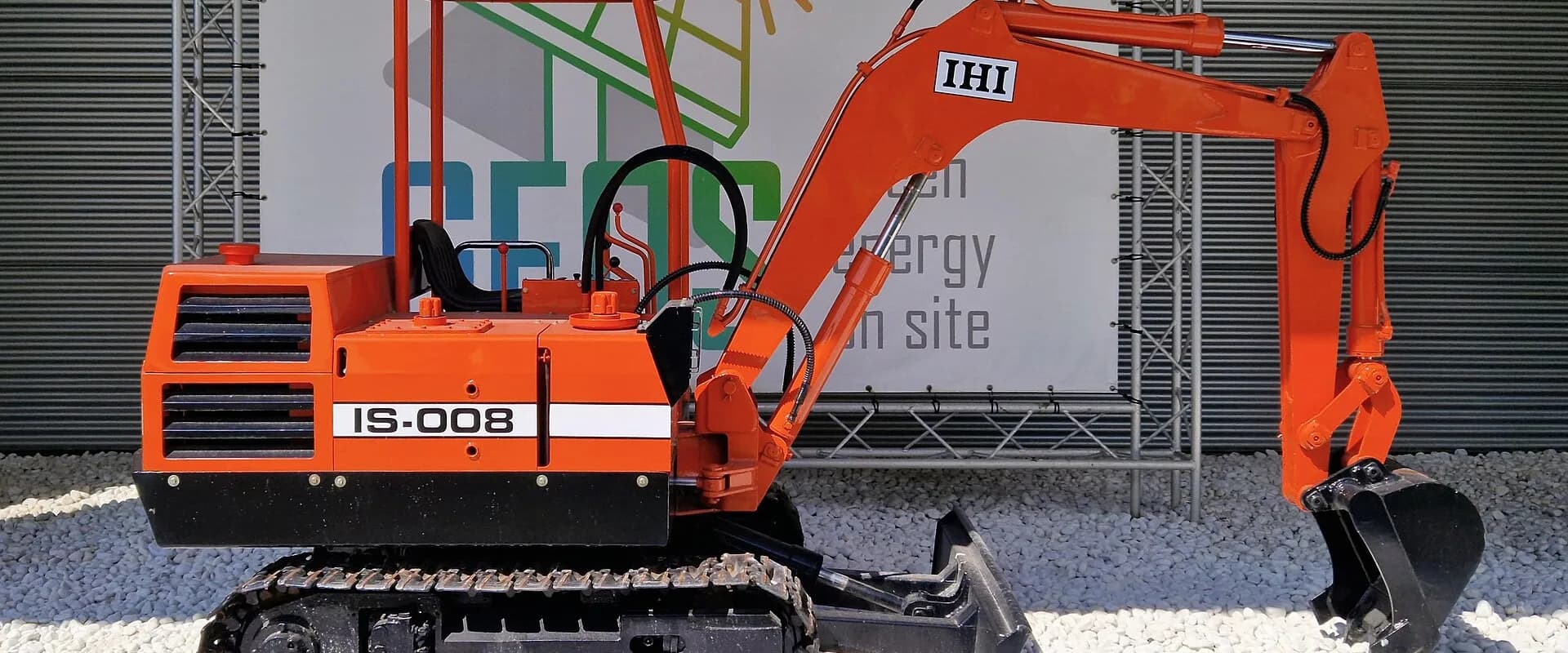
A mini or compact excavator is a scaled-down tracked excavator, usually under about ten tonnes, almost always on rubber tracks, and almost always fitted with a dozer blade for backfilling and levelling. Below roughly six tonnes the industry calls them mini or compact; between six and ten they are usually called midi. The blade and the tail swing configuration are the two things that most distinguish them from full-size machines.
Manufacturers usually encode operating weight in the model number, though less consistently than on full-size machines — a Bobcat E35 and a Kubota KX040 are both roughly three-and-a-half to four tonne machines. The three to five tonne band is the busiest part of the used compact market: big enough for real trenching, small enough to tow legally behind a one-ton truck.
Where these machines usually come from
- Residential landscaping, pool excavation and hardscape work
- Utility trenching in tight spaces and existing developments
- Interior demolition and work inside structures, on the smallest classes
- Septic, irrigation and drainage work on rural property
- Rental fleet duty, which is where a large share of used compacts originate
- Municipal and grounds maintenance
Mini Excavators we buy
Configuration changes who the next buyer is, so it changes the offer. These are the variants worth naming when you describe your machine.
- Zero tail swing
- The house stays inside the track width through a full rotation. Commands a clear premium because it can work against walls, fences and roadsides.
- Reduced or compact tail swing
- A small overhang. Most of the practical benefit of zero tail swing with slightly better balance and lift.
- Conventional tail swing
- Counterweight overhangs the tracks. Better lifting for the weight, but limited on confined sites.
- Expandable undercarriage
- Tracks retract to pass through a gateway and extend for stability while digging. Genuinely useful on the smallest classes and worth calling out.
- Cab versus canopy
- An enclosed cab with heat and air conditioning is worth substantially more than an open canopy machine, and the gap widens on anything that will work year-round.
What determines a used mini excavator's value
Roughly in order of how much each one moves the number.
- 1
Rubber track condition
The most visible wear item and the first thing any buyer looks at. Tracks are far cheaper to replace than a full steel undercarriage, but a worn set is still real money and it sets the tone for the whole inspection.
How to check it: Look for cracking between the lugs, exposed steel cord, missing lugs, and chunks torn out of the edges. Check the idler and roller seals for weeping while you are down there.
- 2
Tail swing configuration
Zero and reduced tail swing machines are worth more than conventional ones of the same weight because they can work in places the conventional machine cannot. This is one of the few spec differences that reliably moves the number on compacts.
- 3
Cab versus canopy, and whether the air conditioning works
An enclosed cab with working climate control is a significant value difference on a compact, more so than most owners expect. It decides whether the machine is usable in a Central Valley summer or a foothill winter.
- 4
Hydraulic thumb and auxiliary circuits
A hydraulic thumb turns a digging machine into a handling machine, and it is one of the most requested features on the used compact market. A machine already plumbed with auxiliary hydraulics, ideally with a second circuit, is worth more than one that needs the work.
- 5
Blade condition and type
Nearly all compacts have a dozer blade and it does real work. A straight blade in good order is expected; an angle blade is a genuine upgrade. Bent blades and worn cutting edges are an easy deduction.
- 6
Hours and hydraulic health
Slow cycle times, boom drift and weak breakout point at pump or valve wear, which on a compact can approach a meaningful share of the machine's value to repair.
How to check it: Hold a loaded bucket off the ground and watch for settle. Run the machine through a full cycle and listen for the pump loading up.
- 7
Coupler and bucket set
A quick coupler and a usable set of buckets — a digging bucket, a wider grading or ditching bucket — widen the buyer pool. List what actually comes with the machine.
- 8
Two-speed travel and blade float
Small features that buyers specifically ask about because they affect how the machine works day to day. Worth mentioning if fitted.
How usage is measured
Engine hours. On compacts, low hours matter more than they do on full-size machines because so many of these units come out of rental fleets, where a high-hour machine has usually been run hard by many different operators. Rental history is not a negative in itself — fleet machines are often better maintained than owner machines — but it is worth telling us.
What gets inspected on a mini excavator
Knowing what a buyer looks at lets you describe the machine accurately the first time, which avoids the offer changing later.
Rubber tracks
Lug depth, cracking, exposed cord, missing lugs, and correct track tension.
Undercarriage beneath the tracks
Roller and idler seal weep, sprocket tooth wear, and any seized rollers.
Front pins and bushings
Lateral play at boom, stick, bucket and link pins, and whether the grease points have been used.
Boom swing
Compacts have an offset boom that swings on its own pivot. Check for slop and for leaks at the swing cylinder — a commonly overlooked wear point.
Blade and cylinder
Cutting edge wear, bent mouldboard, drift in the blade cylinder, and pin play at the blade arms.
Cab and controls
Air conditioning function, glass, door seals, seat condition, and whether the pilot controls are smooth and correctly centred.
Wear items that dominate cost on this class
What we need to price your mini excavator
You do not need all of it to start. The more of it you have, the closer the first number is to the final one.
- Make, model and serial number
- Year and hour meter reading
- Cab or canopy, and whether the air conditioning works
- Tail swing type — zero, reduced, or conventional
- Rubber track condition, or when they were last replaced
- Whether a hydraulic thumb is fitted, and how many auxiliary circuits
- Blade type — straight or angle
- Every bucket and attachment included
- Whether the machine came out of a rental fleet
- Where it is sitting, and whether it will track onto a trailer
Common situations
The circumstances that come up most often when someone sells a mini excavator, and what each one actually means for the sale.
The tracks are worn out
Do not replace them just to sell. Rubber tracks are one of the few things buyers price accurately and unemotionally, and you will rarely recover the full cost of a new set. Tell us the condition honestly and the offer reflects it.
A rental fleet machine with high hours
Not a problem on compacts, and often the opposite. Rental machines usually have documented service intervals and consistent maintenance. Send whatever service records exist — on this class they genuinely move the number.
It was bought for one project and barely used
This is common with compacts and it is worth flagging. A genuinely low-hour machine from a single owner is the strongest position in this category. Note whether it was stored under cover, because sun damage to rubber tracks and seals shows up even on low-hour units.
The machine will not start or track
Still bought. Compacts get sold non-running regularly, often after a hydraulic or final drive failure. Tell us which system stopped working rather than diagnosing it — the sale does not depend on you knowing the cause.
It is on a trailer that you also want to sell
Mention it. A machine and a matched trailer often move better together than separately, and it simplifies collection.
Moving a mini excavator
This is the category's structural advantage. Most compacts under about five tonnes travel on a deck-over or tag trailer, and the larger midi machines go on a lowboy. Nothing in this class normally needs oversize permits, which keeps collection straightforward and is part of why compacts hold their value. Machines that will not track under their own power are winched on. Transport is arranged and paid for by us and is already inside the offer.
Ownership and paperwork
Compact excavators are not titled in California. Ownership transfers by bill of sale against the serial number — the plate is usually on the main frame near the blade or inside the boom-swing bracket. Financing on compacts is common because the purchase price suits equipment loans; it normally shows as a UCC filing rather than on a title, and is settled as part of the purchase.
Attachments and extras
A hydraulic thumb is the one that most changes the buyer pool. Beyond that: augers, breakers, compaction plates, grapples, grading buckets and quick couplers all count. Attachments are frequently the difference between two otherwise identical machines, so list them explicitly rather than assuming they are understood to be included.
Makes and model families we see most
We buy mini excavators from manufacturers beyond this list. These are the ones that come up most often, with the series a seller is likely to recognise from the machine.
| Manufacturer | Model families |
|---|---|
| Bobcat | E-series — E20, E26, E35, E42, E50, E85 |
| Kubota | KX and U series — KX040, KX057, U35, U55 |
| Caterpillar | Next Generation mini range — 301, 303, 305, 308, 310 |
| John Deere | G-series compacts — 26G, 35G, 50G, 60G, 85G |
| Takeuchi | TB series — TB216, TB230, TB240, TB260, TB290 |
| Yanmar | ViO and SV series, including true zero tail swing |
| Kobelco | SK series compacts |
| Case | CX C-series minis |
| Wacker Neuson | EZ and ET series |
| SANY | SY series compacts, increasingly common in US rental fleets |
Get a cash offer
Get an offer on your mini excavator
Tell us what you have and what shape it is in. We come back with a cash figure in writing.
- A written offer, not an estimate
- Transport arranged and priced into the offer
- Running or not, any make
Prefer to talk it through?
(916) 740-7755Get a Cash Offer
Any brand, any condition, any hours.
- Written offer
- Transport arranged
- No Spam
Where we buy mini excavators
We buy across California. Our published town-level coverage is concentrated in these counties.