We buy lowboy trailers
Sell Your Lowboy Trailer
RGN and fixed-neck heavy haul decks — priced on capacity, gooseneck type and deck condition.
- Written offers
- Transport arranged
- Running or not
- California
On this page
MachineryBarn buys used lowboy and removable-gooseneck trailers. Lowboys are valued on capacity and on how the machine gets aboard: a hydraulic detachable gooseneck that drops and drives on is worth considerably more than a mechanical detach or a fixed-neck trailer needing ramps, because loading time is the cost that recurs on every single job. Axle count and deck length set the legal payload, and the deck itself takes the abuse.
What counts as a lowboy trailer
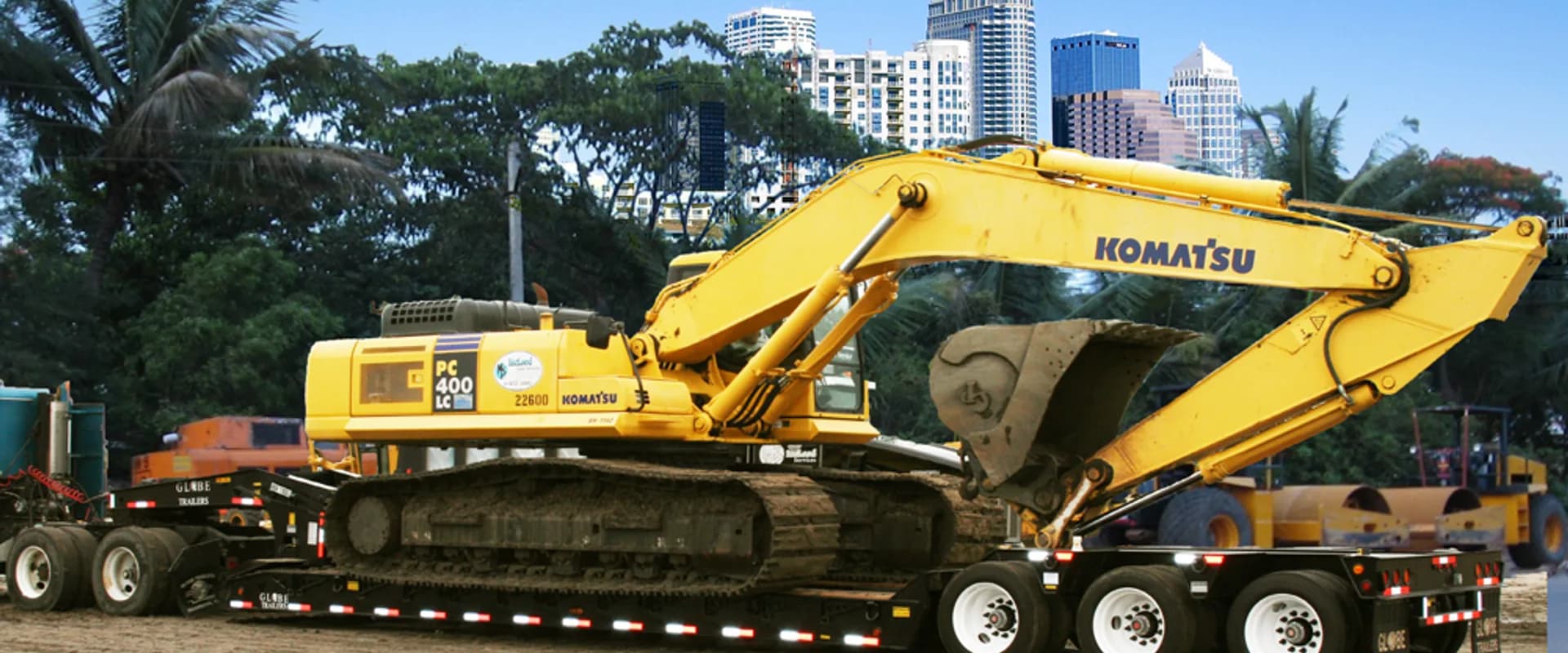
A lowboy is a heavy-haul trailer with a load deck that sits very low between the gooseneck and the rear axles, which allows tall equipment to travel within legal height. A removable gooseneck, or RGN, detaches at the front so the deck rests on the ground and equipment drives straight on — the standard for moving self-propelled machines. Fixed-neck trailers load over the rear with ramps.
Lowboys are described by capacity in tons and by axle count. A 35-ton triple-axle RGN is the general-purpose configuration and covers most construction equipment. Higher-capacity trailers add axles and, above certain weights, become permit loads regardless of what they are carrying. Deck length and whether the trailer has a flip axle or extendable deck decide what it can legally handle.
Where these machines usually come from
- Moving excavators, dozers, loaders and graders between sites
- Equipment dealer and rental fleet delivery
- Crane and industrial machinery transport
- Agricultural equipment haul
- Heavy haul contractors, where the trailer is the business
Lowboy Trailers we buy
Configuration changes who the next buyer is, so it changes the offer. These are the variants worth naming when you describe your machine.
- Hydraulic detachable gooseneck (HRGN)
- Powered detach and re-attach. Fastest loading and the configuration most buyers want. Worth a clear premium.
- Mechanical detachable gooseneck
- Detaches without hydraulics, using the tractor and manual work. Cheaper, slower to load, and a narrower resale market.
- Fixed neck with ramps
- Loads over the rear. Simple and durable, but slow with tracked equipment and limited on deck height.
- Extendable deck
- Stretches for long loads. Valuable to a specific buyer and worth stating explicitly.
- Flip axle equipped
- An additional axle that folds down to spread weight for heavier loads. Say whether it is included — it is often stored separately.
What determines a used lowboy trailer's value
Roughly in order of how much each one moves the number.
- 1
Gooseneck type and function
The single largest specification difference in this category. Hydraulic detach saves real time on every load and is what most working buyers want. Whether the hydraulics actually work is checked immediately — a hydraulic neck that will not lift is a substantial repair.
How to check it: Cycle the neck through detach and re-attach. Watch for drift, listen to the pump, and check for leaks at the cylinders and lines.
- 2
Rated capacity and axle count
Sets what the trailer can legally carry, which sets who wants it. A 35-ton trailer serves general construction; higher capacities serve heavy haul specialists with a narrower but motivated buyer pool.
- 3
Deck condition
The working surface takes tracked machines, chains and steel edges. Rotten wood decking, torn deck plate, and bent or missing crossmembers are common and all cost real money to put right.
How to check it: Walk the deck for soft or missing boards, check the outriggers and deck edges for bends, and look underneath at the crossmembers.
- 4
Main beam and frame integrity
As with any trailer, structural condition decides whether it is a trailer or scrap. Lowboys are overloaded more often than most trailer types, so beam sag and repair history are live questions.
How to check it: Sight along both main beams, look for weld repairs and heat marks, and check the neck-to-deck transition where stress concentrates.
- 5
Suspension, tyres and brakes
Multiple axles means a lot of tyres and brakes, and heavy haul is hard on all of them. Air ride versus spring matters, and axle alignment is checked because a misaligned heavy trailer destroys tyres.
- 6
Ramps, planks and loading equipment
Beavertail ramps, loading planks, outrigger extensions and any winch are part of what makes the trailer usable. Missing ramps on a fixed-neck trailer materially reduce its utility.
- 7
Inspection and registration status
Current annual inspection means the trailer works immediately. Heavy haul trailers get scrutinised more closely than most, so lapsed inspection carries more weight here.
- 8
Corrosion at stress points
Suspension hangers, neck pivot points and the deck-to-beam joints are where structural corrosion matters most on a trailer designed to carry very heavy loads.
How usage is measured
Age and condition, since lowboys carry no meter. What matters is duty: a trailer that spent its life under excavators and dozers has taken far more deck abuse than one hauling agricultural equipment, and tracked machines chew decks faster than wheeled ones.
What gets inspected on a lowboy trailer
Knowing what a buyer looks at lets you describe the machine accurately the first time, which avoids the offer changing later.
Gooseneck
Detach and re-attach function, hydraulic cylinder and pump condition, pin and bushing wear at the pivot, and any repair at the neck-to-beam joint.
Main beams and frame
Beam straightness and sag, weld repair history, heat marks, and crossmember condition.
Deck
Board or plate condition, outrigger straightness, chain and tie-down point integrity, and deck-to-frame fastening.
Suspension and axles
Hanger cracks, bushing wear, air bag or spring condition, axle alignment, and flip axle function where fitted.
Brakes and wheel ends
Lining thickness across every axle, drum condition, slack adjuster travel, and wheel seal leaks.
Loading equipment
Ramp condition and hinges, loading plank presence, winch function, and outrigger extension operation.
Wear items that dominate cost on this class
What we need to price your lowboy trailer
You do not need all of it to start. The more of it you have, the closer the first number is to the final one.
- Year, make, model and VIN
- Rated capacity and axle count
- Gooseneck type — hydraulic detach, mechanical detach, or fixed
- Whether the hydraulic neck works, if fitted
- Deck length and whether it is extendable
- Deck condition, including boards and outriggers
- Whether a flip axle is included
- Ramps and loading planks included
- Tyre and brake condition
- Current inspection status and title condition
Common situations
The circumstances that come up most often when someone sells a lowboy trailer, and what each one actually means for the sale.
The hydraulic gooseneck will not lift
Tell us before an offer. It is the most consequential fault on this trailer type and the repair varies enormously depending on whether it is the pump, the cylinders, or the hydraulics in between. Describing the symptom accurately gets a firm number rather than a provisional one.
The deck boards are wrecked
Expected on a working lowboy and not worth fixing to sell. Deck replacement is a known and priceable job, and buyers of heavy haul trailers deal with it routinely. Describe the extent honestly.
The trailer has been overloaded
Say so, and disclose any beam repair. Overloading is the most common cause of beam sag on lowboys and it is exactly what a buyer inspects for. Documented professional repair is treated very differently from an undisclosed one.
The flip axle is in the yard, not on the trailer
Include it in the listing and say where it is. Flip axles are frequently separated from the trailer and are worth real money — a trailer sold with its flip axle handles heavier loads legally.
You are selling the tractor with it
Send both together. A matched heavy haul tractor and lowboy is often easier to place as a unit, and it simplifies collection considerably.
Moving a lowboy trailer
A roadworthy lowboy is hooked and towed, which is the simple case. A trailer with a non-functioning gooseneck, seized brakes or flat tyres needs work before it can be moved legally, and heavy haul trailers are heavy enough that recovering one from soft ground is a real job. Tell us the condition and where it sits. Transport is arranged and paid for by us and is inside the offer.
Ownership and paperwork
Lowboys are titled trailers in California and transfer through the DMV, with any lien recorded on the title. Because these are high-value trailers, financing is common — confirm who holds the title before agreeing a sale.
Attachments and extras
Ramps, loading planks, flip axles, outrigger extensions, winches, chains, binders and tarps all count and all should be listed with a clear yes or no on inclusion. Lowboys accumulate loading equipment over their lives and it is a meaningful part of what a working hauler is buying.
Makes and model families we see most
We buy lowboy trailers from manufacturers beyond this list. These are the ones that come up most often, with the series a seller is likely to recognise from the machine.
| Manufacturer | Model families |
|---|---|
| Fontaine | Magnitude series RGN trailers |
| Trail King | TK and HDG series lowboys |
| Talbert | Traveling axle and RGN heavy haul trailers |
| XL Specialized | XL series RGN and heavy haul |
| Landoll | Traveling axle trailers, popular for equipment haul |
| Globe | Lowboy and detachable trailers |
| Manac | Lowbed and platform heavy haul |
Get a cash offer
Get an offer on your lowboy trailer
Tell us what you have and what shape it is in. We come back with a cash figure in writing.
- A written offer, not an estimate
- Transport arranged and priced into the offer
- Running or not, any make
Prefer to talk it through?
(916) 740-7755Get a Cash Offer
Any brand, any condition, any hours.
- Written offer
- Transport arranged
- No Spam
Where we buy lowboy trailers
We buy across California. Our published town-level coverage is concentrated in these counties.