We buy loader backhoes
Sell Your Loader Backhoe
Loader on the front, excavator on the back — priced on 4WD, extendahoe reach and transmission type.
- Written offers
- Transport arranged
- Running or not
- California
On this page
MachineryBarn buys used backhoe loaders, running or not. A backhoe is two machines sharing one chassis — a loader on the front and an excavator on the back — and it is priced on both. Two specification details separate the strong sellers from the slow ones: whether it is four-wheel drive, and whether the rear boom is an extendahoe. A two-wheel-drive backhoe without extension is a much narrower sale than most owners expect.
What counts as a loader backhoe
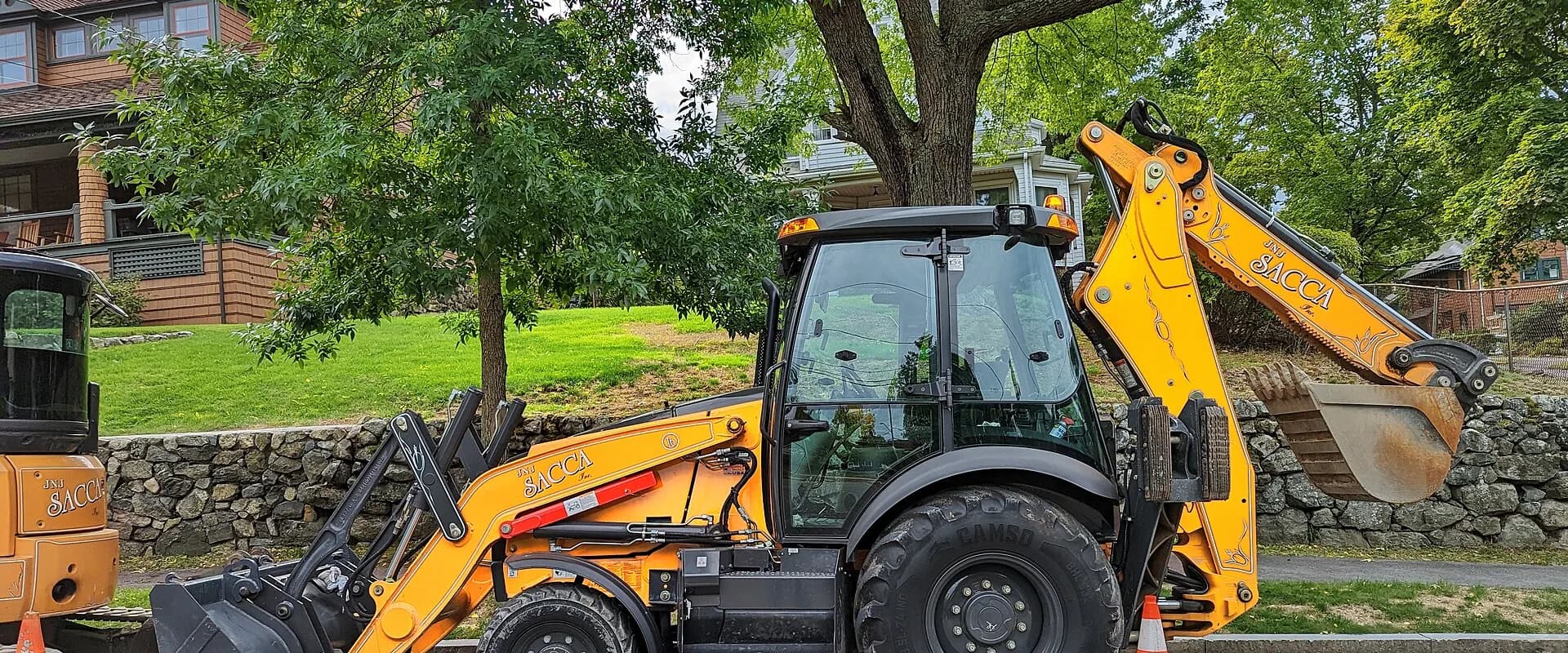
A backhoe loader is a rigid-frame tractor with a loader bucket on the front and a boom, dipper and bucket on the back, worked from a seat that swivels to face rearward. Stabiliser legs hold the machine steady while digging. It is the classic general-purpose machine for utility contractors and municipalities because it digs, loads and drives itself between jobs without a trailer.
Backhoes are described by dig depth and loader capacity rather than by weight class. Standard machines reach roughly fourteen to fifteen feet; an extendahoe adds several feet of reach when extended. That extra reach is what lets a machine dig a trench without repositioning, which is why buyers ask for it specifically.
Where these machines usually come from
- Utility and service work — water, sewer, gas and electrical connections
- Municipal maintenance, where one machine has to do everything
- Small-scale site work, backfilling and trenching
- Agricultural and ranch work
- Landscaping and residential construction
- Snow and yard work with the loader end, in seasonal fleets
Loader Backhoes we buy
Configuration changes who the next buyer is, so it changes the offer. These are the variants worth naming when you describe your machine.
- Two-wheel drive
- Lighter and cheaper, fine for paved and firm ground. A much narrower resale market — most buyers want 4WD and will pass rather than compromise.
- Four-wheel drive
- The configuration most buyers are looking for. Essential for soft ground, slopes and winter work, and it broadens the buyer pool substantially.
- Extendahoe / extendable dipper
- Telescoping rear dipper for extra reach and dig depth. One of the most requested features on the used market and worth stating clearly.
- Powershift versus shuttle transmission
- Powershift suits heavier and more frequent loader work; a shuttle transmission is simpler and common on smaller machines. Buyers have clear preferences depending on the work.
- Centre-mount versus side-shift backhoe
- Side-shift machines can move the rear boom along the frame to dig close to obstacles, which matters for urban utility work.
What determines a used loader backhoe's value
Roughly in order of how much each one moves the number.
- 1
Four-wheel drive
The most consequential single specification on a backhoe. A 4WD machine sells across the whole market; a 2WD machine sells to a fraction of it. If you have 4WD, say so first.
How to check it: Look for a front axle with driveshaft and a 4WD engagement control in the cab.
- 2
Extendahoe
Extra reach and dig depth without repositioning the machine. Widely asked for, and its presence or absence changes the offer noticeably.
How to check it: The rear dipper will have a visible inner section and a dedicated extend control.
- 3
Hours and overall condition
Backhoes live long lives and high hours are normal on this class. What matters more is whether the machine has been maintained through them — hoses, pins, seals and the loader linkage all tell that story.
- 4
Transmission condition and type
Slipping, delayed engagement or harsh shifting points at transmission or torque converter wear, which is a significant repair. Powershift machines generally carry a premium for heavier work.
How to check it: Load the loader bucket and drive up a grade. Check forward and reverse engagement under load in both shuttle directions.
- 5
Loader and hoe pin condition
There are a lot of pins on a backhoe and slop in any of them is immediately visible in operation. It is repairable, but the labour across both ends of the machine adds up.
How to check it: Work the loader through its range and curl the rear bucket slowly, watching each joint for lateral movement.
- 6
Stabiliser condition
Worn stabiliser pads, bent legs or drifting stabiliser cylinders mean the machine cannot hold itself steady while digging, which is a functional defect rather than a cosmetic one.
- 7
Tyres front and rear
Rear tyres on a backhoe are large and expensive, and mismatched or worn sets are an obvious deduction. On 4WD machines the front tyres matter too.
- 8
Buckets, coupler and thumb
Front bucket condition, the range of rear buckets included, a quick coupler and a thumb all widen the buyer pool. List everything that goes with the machine.
- 9
Cab or open ROPS
An enclosed cab with heat and air conditioning makes the machine usable year-round and is worth a clear premium over an open canopy machine.
How usage is measured
Engine hours. Backhoes are unusual in that they also accumulate road miles driving between jobs, and a machine that has spent years travelling has wear on the axles, brakes and tyres that the hour meter does not capture. Mention if the machine has been driven a lot between sites.
What gets inspected on a loader backhoe
Knowing what a buyer looks at lets you describe the machine accurately the first time, which avoids the offer changing later.
Rear boom, dipper and pins
Play at every pin, extendahoe slide wear and condition, cylinder rod scoring, and cracks around the boom foot.
Loader end
Bucket cutting edge, linkage pin play, cylinder drift, and cracks at the loader arm welds.
Stabilisers
Pad wear, cylinder drift under load, bent legs, and whether both sides lift the machine evenly.
Drivetrain
Transmission engagement in both directions, 4WD engagement, front axle and driveshaft condition, and differential oil.
Hydraulics
Cycle times, drift on the loader and hoe under load, hose condition, and leaks at the swing cylinders.
Cab and controls
Seat swivel mechanism, control pattern and whether it is switchable, air conditioning function, and glass condition.
Wear items that dominate cost on this class
What we need to price your loader backhoe
You do not need all of it to start. The more of it you have, the closer the first number is to the final one.
- Make, model and serial number
- Year and hour meter reading
- Two-wheel or four-wheel drive
- Whether it has an extendahoe
- Transmission type, if you know it
- Cab or open ROPS, and whether the air conditioning works
- Tyre condition front and rear
- Every bucket and attachment included
- Whether a thumb or coupler is fitted
- Whether it starts, drives and digs
Common situations
The circumstances that come up most often when someone sells a loader backhoe, and what each one actually means for the sale.
It is two-wheel drive
Not a problem, but be aware it narrows the buyer pool considerably and that is reflected in the offer. There is still a market — paved municipal work and yard duty — it is just smaller than for a 4WD machine.
High hours on an older machine
Normal for this category. Backhoes routinely work well past hour readings that would concern a buyer on other equipment. What matters is whether the pins, hoses and stabilisers have been kept up. Send service records if you have them.
The machine will not start or drive
Still bought. Backhoes have an active parts market and non-running machines move regularly. Tell us which end stopped working — engine, transmission, or hydraulics — rather than diagnosing it.
A municipality retiring a unit
Usually the best-documented machines in this category. Municipal backhoes tend to have low annual hours, consistent servicing and detailed records. Send the maintenance file — it genuinely moves the number here.
There is still finance on it
Straightforward. Equipment finance normally appears as a UCC filing rather than on a title. Get a payoff figure from the lender; it is settled as part of the purchase and you receive the balance.
Moving a loader backhoe
Backhoes are simple to collect. Most travel on a deck-over or lowboy trailer, and nothing in this class needs oversize permits. Machines that still run can often drive onto the trailer under their own power, which keeps collection quick. Non-runners are winched on. Transport is arranged and paid for by us and is already inside the offer.
Ownership and paperwork
Backhoe loaders are not titled in California, despite being road-capable. Ownership transfers by bill of sale against the serial number, which is usually stamped on the frame near the loader tower. Financing appears as a UCC filing and is settled as part of the purchase.
Attachments and extras
Rear buckets of different widths, a front bucket, forks, a hydraulic thumb, a breaker and a quick coupler all count and should be listed. Backhoes accumulate buckets over their lives, and a machine sold with a full set of rear buckets is worth more than one sold with a single worn digging bucket.
Makes and model families we see most
We buy loader backhoes from manufacturers beyond this list. These are the ones that come up most often, with the series a seller is likely to recognise from the machine.
| Manufacturer | Model families |
|---|---|
| Caterpillar | 416, 420, 430, 440, 450 |
| John Deere | 310, 315, 320, 410, 710 |
| Case | 580, 590 Super M and N series |
| JCB | 3CX and 4CX — the range that defined the category |
| New Holland | B95, B110 and LB series |
| Komatsu | WB series |
| Kubota | Tractor-loader-backhoe configurations in the smaller classes |
Get a cash offer
Get an offer on your loader backhoe
Tell us what you have and what shape it is in. We come back with a cash figure in writing.
- A written offer, not an estimate
- Transport arranged and priced into the offer
- Running or not, any make
Prefer to talk it through?
(916) 740-7755Get a Cash Offer
Any brand, any condition, any hours.
- Written offer
- Transport arranged
- No Spam
Where we buy loader backhoes
We buy across California. Our published town-level coverage is concentrated in these counties.