We buy excavators
Sell Your Excavator
Tracked, wheeled, long-reach and zero-tail-swing — priced on undercarriage, hydraulics and hours.
- Written offers
- Transport arranged
- Running or not
- California
On this page
MachineryBarn buys used hydraulic excavators outright — tracked and wheeled, from 10-tonne class machines up to mass-excavation size, running or not. What an excavator is worth comes down to four things in roughly this order: how much undercarriage is left, how healthy the hydraulics are, the hours on the meter, and which emissions tier the engine is. Two machines with the same hour reading can be worth very different money once the undercarriage is measured.
What counts as an excavator
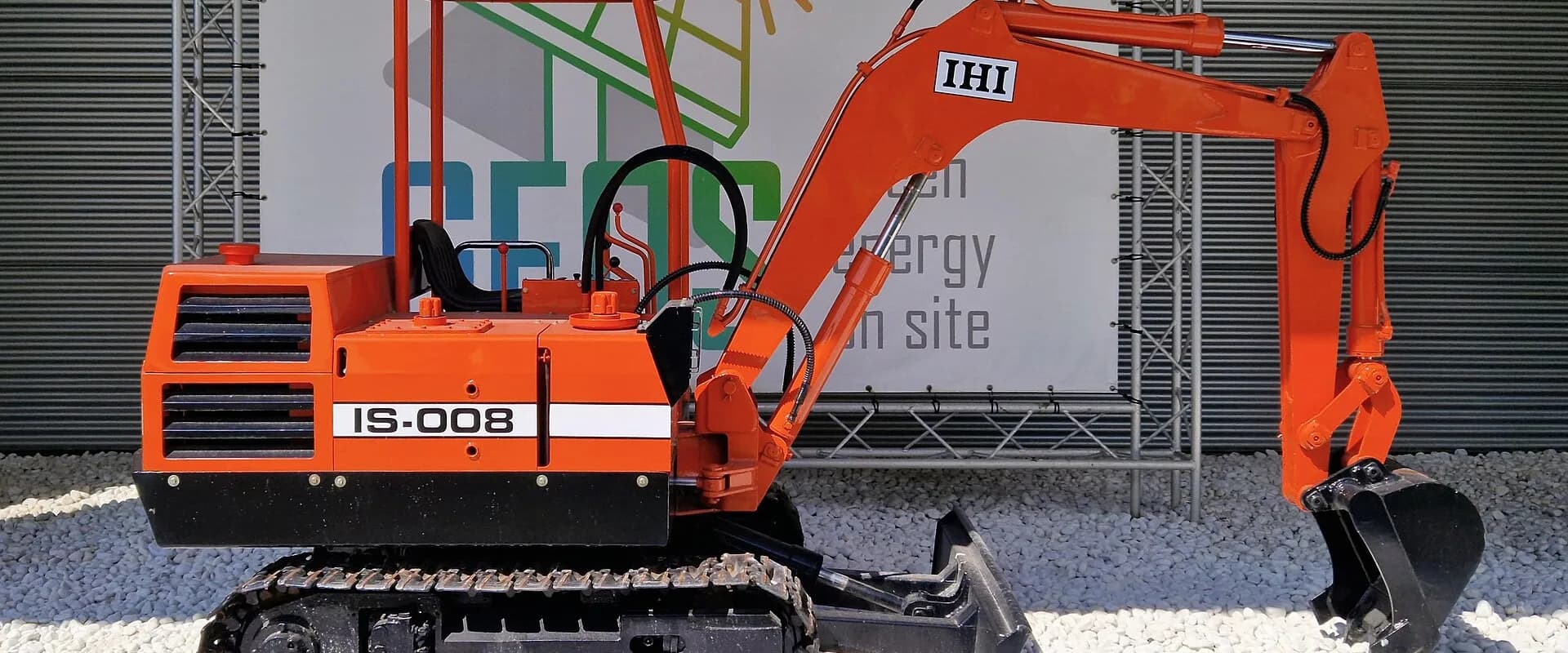
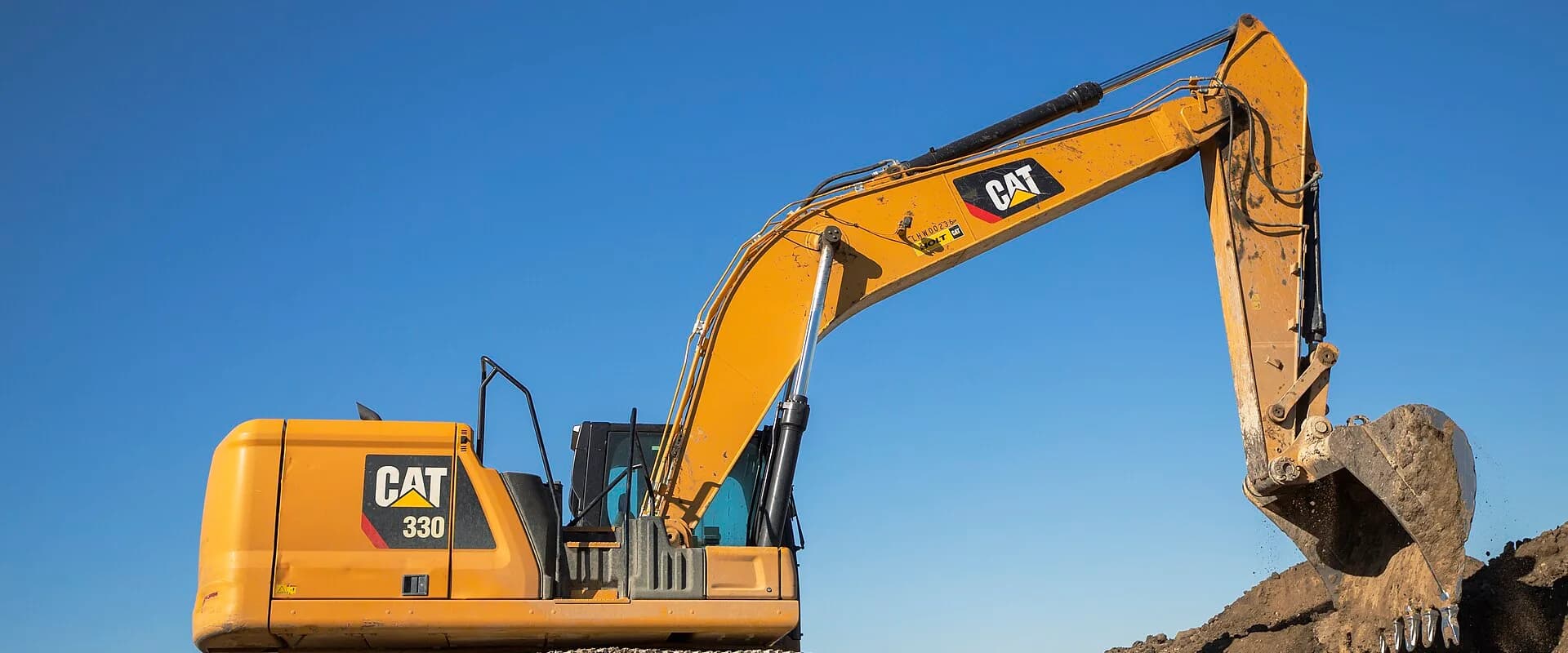
An excavator is a tracked or wheeled machine with a boom, a stick, and a bucket mounted on a house that rotates a full 360 degrees on a slew bearing. Everything that matters mechanically runs on hydraulics: the travel motors, the swing motor, and the three cylinders that work the boom, stick and bucket. Excavators are sized by operating weight in tonnes, and most manufacturers encode that in the model number — a CAT 320 and a Komatsu PC210 are both roughly 20-tonne class machines.
Compact or mini machines run to roughly 6 tonnes, midi machines sit between about 6 and 10, standard machines cover 10 to 45, and anything above that is large or mass-excavation class. The 20-tonne class is the volume segment of the used market in California — big enough for utility and site work, small enough to move on a standard lowboy without permits.
Where these machines usually come from
- Site preparation, mass excavation and grading on building projects
- Trenching for water, sewer, gas and electrical utilities
- Demolition and scrap handling, usually with a breaker, shear or grapple
- Roadwork and highway construction
- Land clearing, pond work and agricultural earthmoving
- Quarry and aggregate loading on larger classes
Excavators we buy
Configuration changes who the next buyer is, so it changes the offer. These are the variants worth naming when you describe your machine.
- Conventional tracked excavator
- The default. Counterweight overhangs the tracks when the house rotates, so it needs room to swing.
- Zero and reduced tail swing
- The house stays within or near the track width. Worth a premium because it can work roadside, between structures, and on urban sites a conventional machine cannot.
- Wheeled excavator
- Rubber-tyred, road-capable, common in utility and municipal work. A smaller used market in California than in Europe, which affects what it brings here.
- Long-reach
- Extended boom and stick for dredging, slope work and pond cleaning. Specialist buyer pool — value depends heavily on whether the front is in good order.
- High-reach demolition
- Purpose-built for structure demolition, often with a quick-change front. Expect scrutiny of the boom pins and any hammer or shear history.
What determines a used excavator's value
Roughly in order of how much each one moves the number.
- 1
Undercarriage condition
Usually the largest single wear cost on a tracked excavator. Chains, links, rollers, idlers, sprockets and shoes all wear together, and a full undercarriage on a 20-tonne machine is a serious expense. Buyers price it as remaining percentage, not as pass or fail.
How to check it: Look at sprocket teeth from the side — new teeth are symmetrical, worn ones hook over. Check track sag, look for dry or seized rollers, and check for oil weeping from roller and idler seals.
- 2
Hydraulic health
Weak or contaminated hydraulics are the most expensive thing that can be wrong. Slow cycle times, a boom that settles under load, or milky oil all point at pumps, valve bank or cylinder wear rather than a simple repair.
How to check it: Raise the boom with a loaded bucket, hold it, and watch for drift over a minute. Time a full boom-up and stick-in cycle. Look at the oil in the sight glass — cloudy or grey means water or metal.
- 3
Engine hours and emissions tier
Tier matters as much as hours in California. Newer Tier 4 Final machines suit contractors working under state fleet rules; older Tier 3 and earlier machines often bring stronger money from out-of-state or export buyers than from a California fleet. Neither is worth less in the abstract — they have different buyers.
- 4
Pin and bushing wear in the front
Slop at the boom, stick, bucket and link pins shows up as sloppy bucket control and shortens the life of everything around it. It is repairable, but the labour is significant and buyers deduct for it.
How to check it: Curl the bucket in and out slowly with the stick horizontal and watch each joint for lateral movement and clunk.
- 5
Final drives and swing bearing
A failing final drive or a worn slew bearing is a major component job. Both are common failure points on high-hour machines and both are expensive to put right.
How to check it: Listen for whine or grinding when tracking and swinging. Check final drive oil for metal, and look for swing bearing play by watching the house-to-frame gap during a swing.
- 6
Auxiliary hydraulic plumbing
A machine already plumbed for a hammer or a thumb, especially with second and third function circuits and a proportional control, is worth meaningfully more than one that needs the work done.
- 7
Coupler, bucket and thumb
A quick coupler and a hydraulic thumb widen the buyer pool considerably. Buckets in good order with sound cutting edges and teeth are worth listing separately when you tell us what is included.
- 8
Cab condition and climate control
Working air conditioning, intact glass, a sound seat and a clean interior are read as a proxy for how the whole machine was treated. Cheap to overlook, and it moves offers.
How usage is measured
Engine hours, from the hour meter. Hours alone mislead on excavators more than on most machines: 6,000 hours of trenching is gentler on a machine than 3,000 hours running a hydraulic breaker, because hammer work cycles the hydraulics and shakes the front end far harder. Tell us what the machine has been doing and it changes how we read the meter.
What gets inspected on an excavator
Knowing what a buyer looks at lets you describe the machine accurately the first time, which avoids the offer changing later.
Undercarriage
Sprocket tooth profile, idler and roller seal condition, track chain sag, bushing turn history, and whether the shoes are cracked or bent.
Hydraulic cylinders
Rod chrome for scoring and pitting, seal weep at the gland, and any bent rods on the bucket and stick cylinders.
Front pins
Lateral play at each joint, missing or seized grease fittings, and elongated pin bores.
Slew and final drives
Swing bearing play, gear oil condition, and any grinding or whine under load.
Engine and cooling
Cold-start behaviour, blow-by, coolant condition, radiator and oil cooler cleanliness, and any aftertreatment fault codes on Tier 4 machines.
Structure
Weld repairs at the boom foot and stick nose, cracks around the counterweight mounts, and any evidence of a past rollover.
Wear items that dominate cost on this class
What we need to price your excavator
You do not need all of it to start. The more of it you have, the closer the first number is to the final one.
- Make, model and serial number — the serial plate is usually on the right side of the house or the main frame
- Year and current hour meter reading, and whether the meter has ever been replaced
- Undercarriage percentage if it has been measured, or when it was last replaced
- What the machine has mostly been doing — trenching, mass dig, hammer work, demolition
- Auxiliary hydraulics fitted, and how many circuits
- Coupler type and every attachment included in the sale
- Anything not working, including intermittent faults
- Where the machine is sitting and whether it can be loaded under its own power
Common situations
The circumstances that come up most often when someone sells an excavator, and what each one actually means for the sale.
The machine will not start or will not move
Still saleable, and often worth more than owners expect. Excavators are bought non-running routinely. What changes the number is which system failed: an engine that will not run is a known quantity, while a hydraulic failure is harder to price without seeing it. Tell us what happened and when it stopped rather than guessing at a cause.
High hours and worn undercarriage
Do not replace the undercarriage in order to sell. You rarely recover the cost. Get it measured or estimate the remaining percentage honestly and let the offer reflect it — buyers price a known worn undercarriage more kindly than an unknown one.
There is still finance on the machine
Common and workable. Equipment finance normally shows as a UCC filing rather than on a title, so ask your lender for a current payoff figure. The payoff is settled as part of the purchase and you receive the balance.
The machine came with a business or an estate
We can work from the serial plate when the paperwork is thin. Bring whatever exists — original invoice, finance documents, service records — and we will tell you what else is needed before anything is collected.
An older machine in a California fleet
California regulates in-use off-road diesel fleets through CARB, and those rules affect which older machines a California contractor can practically add to a fleet. It is a common reason an older Tier 3 machine draws stronger interest from out-of-state or export buyers. Check your current reporting obligations with CARB directly — the requirements change.
Moving an excavator
A 20-tonne class excavator moves on a lowboy or RGN trailer, and most standard machines travel without special permits. Wider machines, long-reach fronts and anything above roughly 45 tonnes may need the counterweight or boom removed and an oversize permit. Machines that cannot track under their own power are winched on, which is routine but needs to be known in advance so the right trailer and equipment arrive. Transport is arranged and paid for by us and is already accounted for in the offer.
Ownership and paperwork
Construction excavators are not titled the way a road vehicle is in California. Ownership normally transfers by bill of sale against the serial number, so the serial plate matters — photograph it early. If the machine was financed, the lender's interest usually appears as a UCC filing, and that gets cleared as part of the sale rather than left with you.
Attachments and extras
A hydraulic thumb, a quick coupler, a set of sound buckets, a breaker or a grapple all add real value and all should be listed explicitly. Attachments left off the list are assumed not to be included. If a hammer has been run on the machine, say so — it changes how the hydraulics are assessed, and hiding it only causes a re-cut later.
Makes and model families we see most
We buy excavators from manufacturers beyond this list. These are the ones that come up most often, with the series a seller is likely to recognise from the machine.
| Manufacturer | Model families |
|---|---|
| Caterpillar | 300 series — 305, 315, 320, 330, 336, 349 |
| Komatsu | PC series — PC138, PC210, PC290, PC360, PC490 |
| John Deere | G and P series — 135, 210, 245, 350, 470 |
| Volvo | EC and ECR series, including reduced tail swing |
| Hitachi | ZAXIS series — ZX130, ZX210, ZX350 |
| Case | CX series — CX130 through CX490 |
| Kobelco | SK series — SK140, SK210, SK350 |
| Hyundai | HX and Robex series |
| Liebherr | R series |
| Doosan / Develon | DX series |
Get a cash offer
Get an offer on your excavator
Tell us what you have and what shape it is in. We come back with a cash figure in writing.
- A written offer, not an estimate
- Transport arranged and priced into the offer
- Running or not, any make
Prefer to talk it through?
(916) 740-7755Get a Cash Offer
Any brand, any condition, any hours.
- Written offer
- Transport arranged
- No Spam
Where we buy excavators
We buy across California. Our published town-level coverage is concentrated in these counties.