We buy compactors / rollers
Sell Your Compactor
Smooth drum, padfoot, pneumatic and asphalt rollers — priced on drum condition and whether vibration works.
- Written offers
- Transport arranged
- Running or not
- California
On this page
MachineryBarn buys used compaction equipment — smooth drum rollers, padfoot rollers, pneumatic tyre rollers, asphalt tandems and walk-behind units, running or not. Compactors are simple machines with one expensive failure mode: the vibratory system. A roller that drives fine but no longer vibrates is worth a fraction of one that does, because vibration is the entire function. That is the first thing to test and the first thing to tell us.
What counts as a compactor
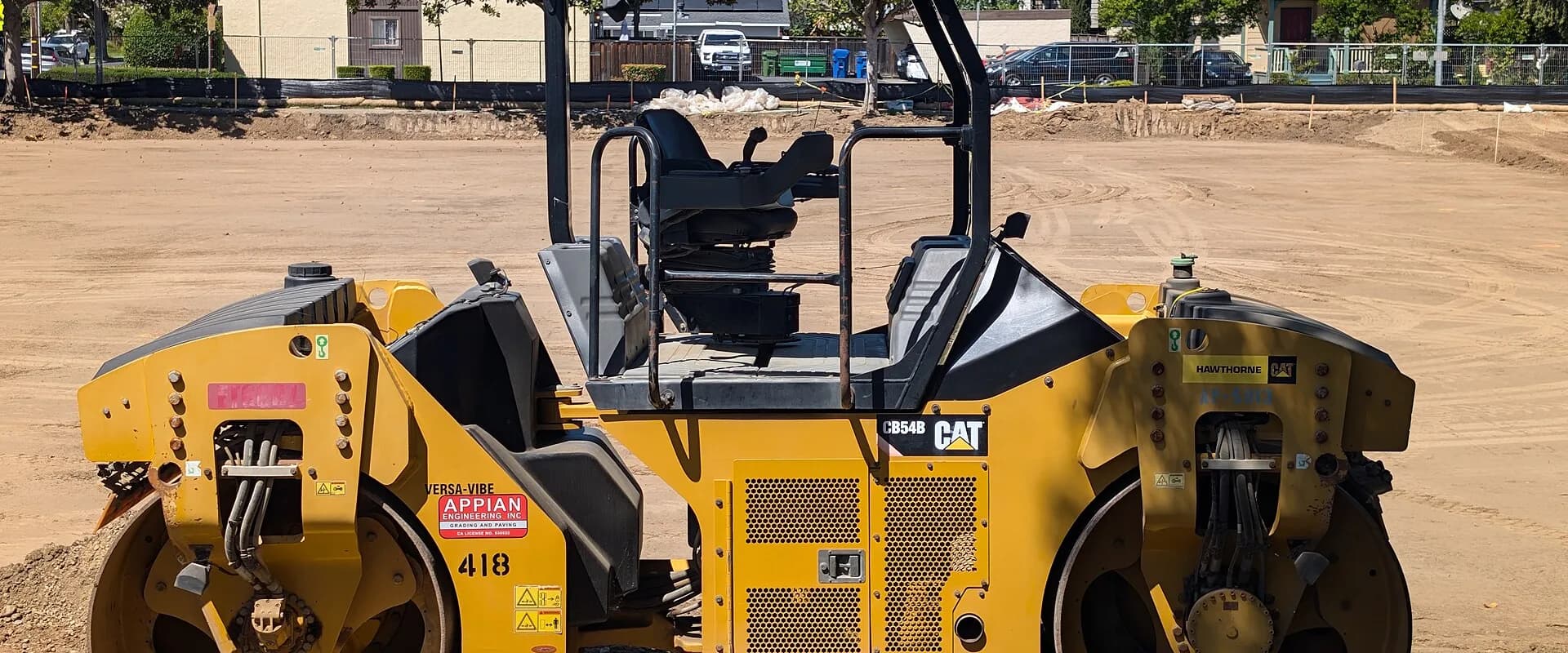
A compactor densifies soil, aggregate or asphalt by combining static weight with vibration. Single drum rollers have one steel drum and rubber drive tyres and are used on soil; double drum tandem rollers have steel at both ends and are used on asphalt; pneumatic rollers use rows of rubber tyres to knead the surface. Padfoot or sheepsfoot drums have protruding feet for cohesive soils like clay.
Compactors are described by drum width and operating weight. Small walk-behind and ride-on units handle trenches and driveways; mid-size single drums in the sixty-six to eighty-four inch range are the volume segment for site work; larger machines serve highway and mass earthwork. Asphalt tandems are classed by weight because that determines what mat thickness they suit.
Where these machines usually come from
- Soil and subgrade compaction on site preparation
- Road base and aggregate compaction
- Asphalt paving, using tandem and pneumatic rollers
- Trench and utility backfill, on smaller and walk-behind units
- Landfill compaction, on purpose-built machines
- Rental fleet duty across all sizes
Compactors / Rollers we buy
Configuration changes who the next buyer is, so it changes the offer. These are the variants worth naming when you describe your machine.
- Single drum smooth roller
- Steel drum front, rubber drive tyres rear. The general-purpose soil compactor and the widest resale market.
- Padfoot / sheepsfoot roller
- Protruding feet on the drum for clay and cohesive soils. Some machines take a bolt-on padfoot shell over a smooth drum — say which you have.
- Double drum asphalt tandem
- Steel drums both ends with water spray systems. Purpose-built for asphalt and a distinct buyer pool from soil machines.
- Pneumatic tyre roller
- Rows of rubber tyres that knead rather than vibrate. Used for asphalt sealing and specific soil work.
- Walk-behind and trench rollers
- Small units for confined work, often remote controlled. Easy to transport and popular with utility contractors.
What determines a used compactor's value
Roughly in order of how much each one moves the number.
- 1
Vibratory system function
The single most consequential thing on the machine. A roller that will not vibrate cannot compact, and the eccentric weights, bearings and drive system inside the drum are a substantial repair. Test it before you sell so you can state it accurately.
How to check it: Engage vibration on both amplitude settings if fitted and confirm the drum actually vibrates rather than just making noise. Listen for bearing rumble from inside the drum.
- 2
Drum condition
Dents, flat spots, cracks or heavy scoring on a smooth drum transfer straight into the finished surface, which matters enormously on asphalt and still matters on soil. On padfoot drums, worn or missing feet reduce effectiveness.
How to check it: Sight along the drum for flats and dents, and check the drum shell for cracks around the weld seams and the edge scrapers.
- 3
Drum bearing and isolation mount condition
Rubber isolation mounts between drum and frame absorb vibration and perish with age. Worn mounts transmit vibration into the frame and the operator, and worn drum bearings are a drum-out repair.
- 4
Water system, on asphalt machines
Tandem asphalt rollers need working water spray to stop the mat sticking to the drums. Blocked nozzles, a failed pump or a cracked tank are common on machines stored through a freeze and are checked immediately.
- 5
Drive tyres, on single drum machines
The rear drive tyres are large and expensive, and on a soil compactor they take real punishment. A worn or mismatched set is a visible deduction.
- 6
Hours, engine and emissions tier
Standard off-road diesel considerations including California's fleet rules for older machines. Compactors are often older than the rest of a fleet because they last, which makes tier a live question on this category.
- 7
Padfoot shell, where applicable
A bolt-on padfoot shell that converts a smooth drum machine is worth listing separately — it materially widens what the machine can do and it is a component that often goes missing.
- 8
ROPS, cab and operator station
Most compactors are open ROPS machines and that is normal. Enclosed cabs with air conditioning exist on larger units and carry a premium.
How usage is measured
Engine hours. Compactor hours are usually modest relative to other equipment because the machines work in bursts rather than continuously, so a high hour reading on a roller means more than the same number on an excavator. Duty matters too — rock and recycled aggregate are far harder on a drum than soil.
What gets inspected on a compactor
Knowing what a buyer looks at lets you describe the machine accurately the first time, which avoids the offer changing later.
Vibratory system
Vibration engagement on all settings, bearing noise from inside the drum, amplitude change function, and eccentric drive condition.
Drum
Flat spots, dents, cracks at weld seams, scraper condition, and pad wear on padfoot drums.
Isolation mounts
Rubber mount perishing, cracking or collapse, and excessive vibration transmitted to the frame.
Water system, asphalt machines
Pump function, nozzle blockage, tank cracks, filter condition, and even spray across the drum width.
Drivetrain
Hydrostatic drive noise, drum drive motor function, tyre condition, and articulation joint play.
Engine and controls
Cold start, fault codes, throttle and travel control function, and gauge operation.
Wear items that dominate cost on this class
What we need to price your compactor
You do not need all of it to start. The more of it you have, the closer the first number is to the final one.
- Make, model and serial number
- Year and hour meter reading
- Machine type — single drum, padfoot, tandem asphalt, pneumatic, walk-behind
- Drum width
- Whether vibration works, on all settings
- Drum condition, including any flats or dents
- For asphalt machines: whether the water system works
- Drive tyre condition on single drum machines
- Whether a padfoot shell is included
- Whether it starts, drives and vibrates
Common situations
The circumstances that come up most often when someone sells a compactor, and what each one actually means for the sale.
The roller drives but will not vibrate
Tell us this first — it is the single most important fact about a compactor. The machine is still bought, but a non-vibrating roller is priced as a machine needing drum work, and discovering it at inspection instead of at offer time means an unnecessary re-cut.
The drum has flat spots or dents
It matters more on asphalt machines than on soil machines, because drum imperfections print into the finished mat. Describe what you can see. Do not attempt a repair to sell — drum work is specialist and the cost is not recovered.
It has been parked through a winter
Say so, particularly for asphalt tandems. Water systems crack when they freeze, and a stored roller frequently needs the pump, tank and nozzles addressed. It is a known and priceable condition rather than a problem.
You have a padfoot shell in the yard
Include it in the listing. Bolt-on shells widen what the machine can do and they are commonly separated from the roller over the years. A machine sold with its shell is worth more than one sold without.
A rental fleet clearing older units
Send the list with models, drum widths and hours. Compactors last a long time, so rental fleets often carry older units that are still fully serviceable — they price well as a group.
Moving a compactor
Compactors are among the easier machines to collect. Walk-behind and small ride-on units travel on a standard trailer; mid-size single drums go on a deck-over or lowboy; only the largest machines approach permit territory. Nothing here normally needs disassembly. Machines that will not drive are winched on, which is routine. Transport is arranged and paid for by us and is already inside the offer.
Ownership and paperwork
Compactors are not titled in California. Ownership transfers by bill of sale against the serial number, usually on the frame near the operator platform. Any financing appears as a UCC filing rather than on a title and is settled as part of the purchase.
Attachments and extras
Padfoot shells, drum scrapers, spare water pumps, remote control units on trench rollers, and any spare drum should be listed. The padfoot shell is the item most worth calling out because it is both valuable and easily overlooked.
Makes and model families we see most
We buy compactors / rollers from manufacturers beyond this list. These are the ones that come up most often, with the series a seller is likely to recognise from the machine.
| Manufacturer | Model families |
|---|---|
| Caterpillar | CS and CB series — CS44, CS56, CB13, CB15 |
| Bomag | BW series, across soil and asphalt |
| Hamm | H and HD series |
| Dynapac | CA and CC series |
| Volvo | SD and DD series |
| Sakai | SV and SW series |
| Wacker Neuson | Walk-behind, trench rollers and plate compactors |
| Case | SV and DV series |
Get a cash offer
Get an offer on your compactor
Tell us what you have and what shape it is in. We come back with a cash figure in writing.
- A written offer, not an estimate
- Transport arranged and priced into the offer
- Running or not, any make
Prefer to talk it through?
(916) 740-7755Get a Cash Offer
Any brand, any condition, any hours.
- Written offer
- Transport arranged
- No Spam
Where we buy compactors / rollers
We buy across California. Our published town-level coverage is concentrated in these counties.