We buy aggregate equipment
Sell Your Aggregate Equipment
Crushers, screens and conveyors — priced on wear part condition, drive health and portability.
- Written offers
- Transport arranged
- Running or not
- California
On this page
MachineryBarn buys used aggregate equipment — jaw and cone crushers, impactors, screening plants, conveyors, washing plants and pugmills, portable and stationary. Aggregate plant is valued on the wear parts and the drive: liners, jaws, mantles and screen media are consumables that can represent a serious cost on their own, and bearing and gearbox condition determines whether the machine is a running plant or a rebuild. Whether the unit is portable also matters enormously, because it decides who can practically buy it.
What counts as an aggregate equipment
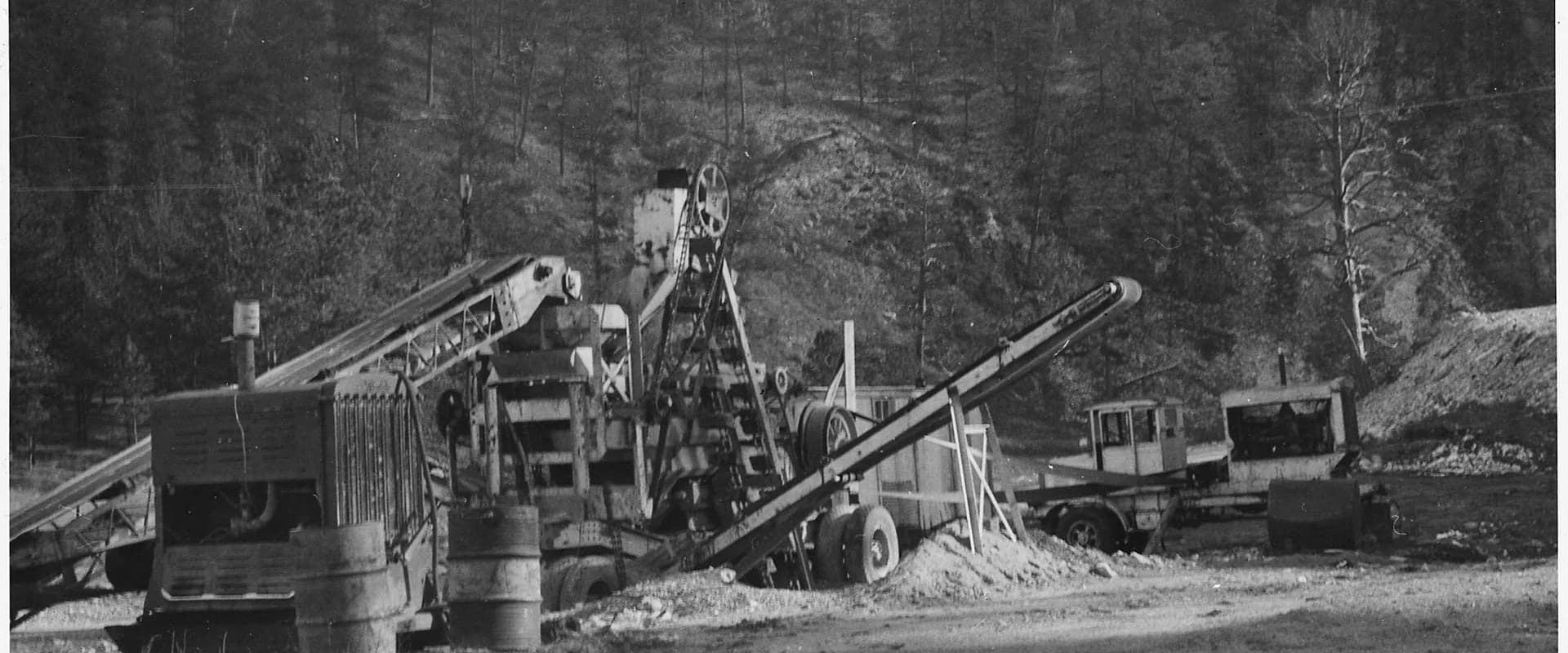
Aggregate equipment processes rock, sand and recycled material into graded product. Crushers reduce size — jaws by compression between plates, cones by compression in an annular gap, impactors by striking material against blow bars. Screens separate by size, conveyors move material between stages, and wash plants remove fines.
Crushers are described by feed opening and throughput; screens by deck size and number of decks; conveyors by belt width and length. Portable plants on tracks or wheels are described by the same figures plus how they move. Throughput ratings assume ideal material — the practical figure depends on what is being crushed.
Where these machines usually come from
- Quarry and sand-and-gravel production
- Recycled concrete and asphalt processing, which is significant work in California
- Construction site material processing
- Demolition debris recycling
- Mining and industrial minerals
Aggregate Equipment we buy
Configuration changes who the next buyer is, so it changes the offer. These are the variants worth naming when you describe your machine.
- Jaw crusher
- Primary reduction by compression. Simple, robust, and the most common first stage. Priced heavily on jaw plate and bearing condition.
- Cone crusher
- Secondary and tertiary reduction. Mantle and bowl liner wear, plus the hydraulic adjustment system, decide the value.
- Impact crusher
- Reduction by striking. Favoured for recycled concrete and asphalt. Blow bar and apron condition are the consumables.
- Screening plant
- Separates by size on vibrating decks. Screen media, bearings and the vibrator mechanism carry the value.
- Conveyors, wash plants and pugmills
- Supporting equipment that is frequently sold alongside a crushing or screening spread and is easier to place as part of one.
What determines a used aggregate equipment's value
Roughly in order of how much each one moves the number.
- 1
Wear part condition
Jaw plates, cone mantles and bowl liners, impactor blow bars and aprons, and screen media are all consumables with substantial replacement costs. A crusher needing a full set of liners is priced very differently from one recently relined, and this is usually the largest single variable.
How to check it: Measure remaining thickness on jaw plates and liners where you can, check blow bar wear, and look at screen media for holes and worn cloth.
- 2
Bearing and drive condition
The expensive failure. Main shaft bearings on a jaw, the countershaft and head assembly on a cone, and screen vibrator bearings are all major-component repairs. Noise and heat are the available signals.
How to check it: Run the plant if possible and listen for rumble, knock or unusual vibration. Check bearing housings for heat and grease condition.
- 3
Portability
Track-mounted and wheeled portable plants have a much broader buyer pool than stationary installations, because a portable plant can move to the next job while a stationary one has to be dismantled, transported and re-erected. This changes the number substantially.
- 4
Frame and structural condition
Screening plants and crushers vibrate constantly and the frames crack. Prior weld repair is normal; the question is whether it was done properly and where. Structural cracking near the vibrator mounts or crusher frame is serious.
- 5
Engine or power unit
Portable plants have their own diesel power units subject to the same California off-road diesel considerations as any other equipment. Electric plants need to match the buyer's available supply, which is its own constraint.
- 6
Hydraulic and control systems
Cone adjustment systems, tramp release, hydraulic folding on portable plants and the control panel all need to work. A cone that cannot be adjusted cannot produce to spec.
- 7
Conveyor and belt condition
Belts, idlers, pulleys and lagging are constant wear items across every conveyor in a spread, and a plant with worn belts throughout represents a meaningful bill.
- 8
Completeness of the spread
A matched crushing and screening spread with its conveyors and feeders is worth more together than as separate machines, because the buyer gets a working production line rather than a compatibility exercise.
How usage is measured
Engine or motor hours where fitted, and tonnes processed where the operation tracked it. Aggregate plant is unusual in that what was processed matters more than how long: abrasive granite and recycled concrete with rebar destroy wear parts far faster than river gravel, and it shows in every consumable.
What gets inspected on an aggregate equipment
Knowing what a buyer looks at lets you describe the machine accurately the first time, which avoids the offer changing later.
Crushing chamber
Jaw plate, mantle, bowl liner or blow bar thickness; cheek plate and apron condition; and chamber frame integrity.
Bearings and drive
Main bearing noise and heat, countershaft condition, drive belt or coupling wear, and gearbox oil condition.
Screen decks
Screen media condition and holes, deck frame cracks, vibrator bearing noise, and spring or mount condition.
Conveyors
Belt condition and tracking, idler and pulley wear, lagging condition, and drive motor function.
Structure
Frame cracks, prior weld repair especially near vibrating components, and chassis condition on portable plants.
Power and controls
Engine or motor condition, hydraulic system function, cone adjustment and tramp release, and control panel operation.
Wear items that dominate cost on this class
What we need to price your aggregate equipment
You do not need all of it to start. The more of it you have, the closer the first number is to the final one.
- Make, model and serial number of each unit
- Year and hour meter reading where fitted
- Equipment type — jaw, cone, impactor, screen, conveyor, wash plant
- Portable on tracks or wheels, or stationary
- Wear part condition, and when liners or media were last replaced
- What material it processed — granite, river gravel, recycled concrete, asphalt
- Whether it runs and produces to spec
- Power source — diesel power unit or electric
- Whether the units form a matched spread
- Where it sits and what the access is like
Common situations
The circumstances that come up most often when someone sells an aggregate equipment, and what each one actually means for the sale.
The liners are worn out
Expected and priceable. Do not reline a crusher to sell it — liner sets are expensive and the cost is not recovered. Tell us the remaining condition and the offer reflects a known quantity rather than an assumed worst case.
It processed recycled concrete with rebar
Say so. Recycled material with steel in it is among the hardest duty aggregate plant sees, and it shows in the wear parts, the frame and the belts. Disclosing it produces a firm number instead of a defensive one.
It is a stationary plant that needs dismantling
Tell us early and in detail. Dismantling, transport and re-erection are a substantial part of a stationary plant's cost to the next owner, and it materially affects both the offer and how the collection is organised.
A quarry or recycling yard closing
Send the complete list — crushers, screens, conveyors, feeders, loaders and haul trucks. Aggregate operations move far better as a working spread than piece by piece, and it is a single logistical exercise rather than several.
The plant has not run in years
Say how long. Parked crushing plant develops seized bearings, perished belts and hydraulic problems, and a plant that cannot be turned over is a different assessment from one that runs. It is workable either way, it just needs to be priced as what it is.
Moving an aggregate equipment
Among the most demanding collections we handle. Track-mounted portable plants travel on a heavy lowboy and frequently need conveyors folded or removed and an oversize permit. Stationary plant has to be dismantled, and that is a project rather than a pickup. Access matters as much as the equipment — quarry floors and recycling yards are not always suited to a lowboy. Give us the location and access detail early. Transport is arranged and paid for by us and is inside the offer.
Ownership and paperwork
Aggregate equipment is not titled in California. Ownership transfers by bill of sale against the serial number of each unit — and on a spread that means several serial numbers, so record them all. Because these are high-value assets, financing is common and appears as a UCC filing, sometimes covering multiple units under one agreement.
Attachments and extras
Spare liner sets, screen media, blow bars, belts, feeders, magnets, water spray systems and any spare conveyors all count and are worth listing. Spare wear parts in particular carry real value because they are expensive and specific to the machine.
Makes and model families we see most
We buy aggregate equipment from manufacturers beyond this list. These are the ones that come up most often, with the series a seller is likely to recognise from the machine.
| Manufacturer | Model families |
|---|---|
| Metso | Nordberg, Lokotrack portable crushing and screening |
| Terex | Finlay, Cedarapids and Powerscreen ranges |
| Powerscreen | Portable crushing and screening plants |
| Kleemann | Mobicat and Mobicone portable plants |
| Sandvik | Mobile and stationary crushing and screening |
| Astec | Crushing, screening and washing equipment |
| Eagle Crusher | Portable impact crushing plants |
| KPI-JCI | Crushing, screening and washing plants |
Get a cash offer
Get an offer on your aggregate equipment
Tell us what you have and what shape it is in. We come back with a cash figure in writing.
- A written offer, not an estimate
- Transport arranged and priced into the offer
- Running or not, any make
Prefer to talk it through?
(916) 740-7755Get a Cash Offer
Any brand, any condition, any hours.
- Written offer
- Transport arranged
- No Spam
Where we buy aggregate equipment
We buy across California. Our published town-level coverage is concentrated in these counties.